
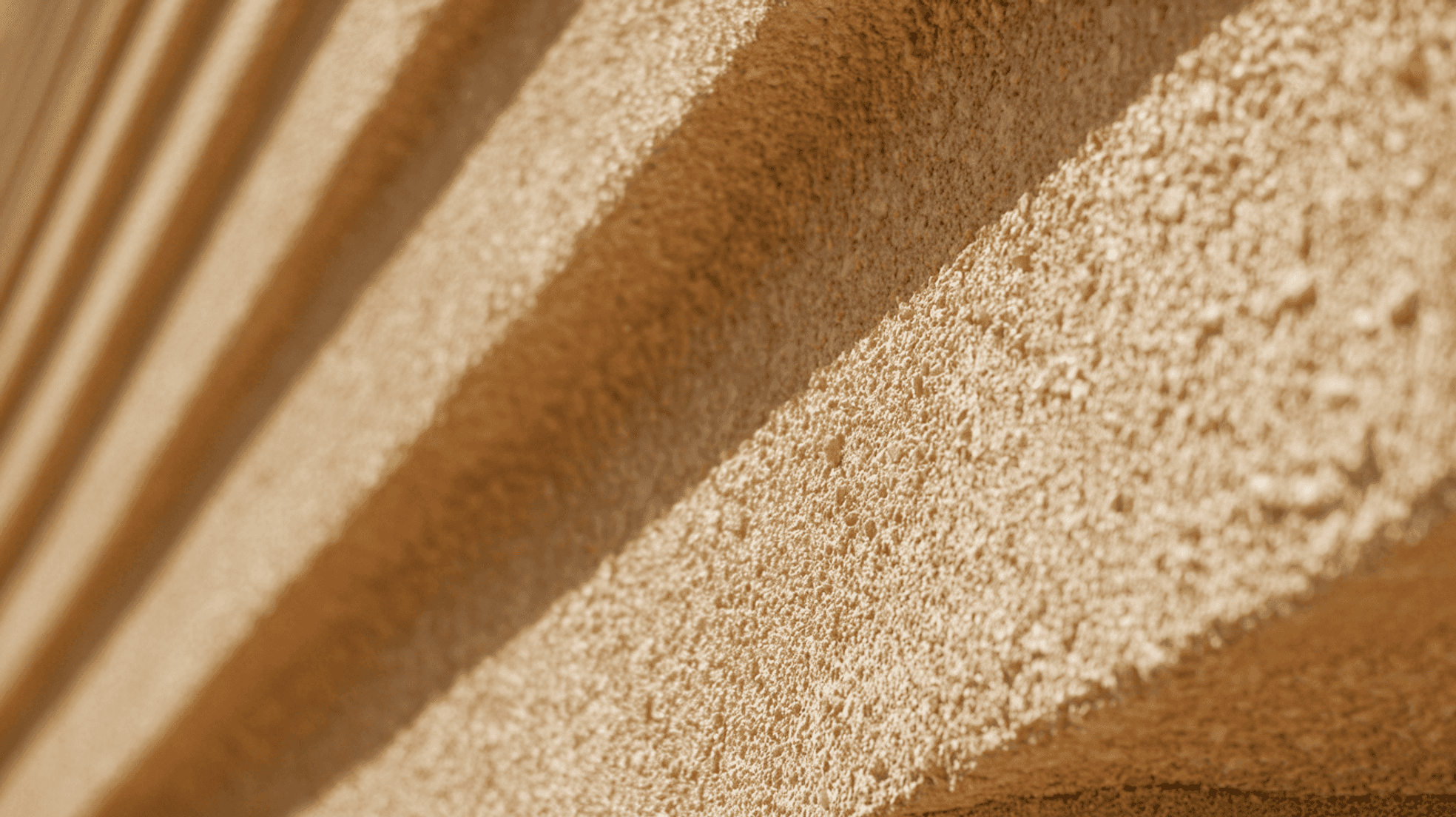
Stucco and drywall repair
Stucco and drywall repair before painting in the East Valley
Cracks, holes and failed caulk are patched, textured to match and primed as part of your repaint, before the first coat goes on. Tim Rochford looks at each repair when he writes the estimate.
5.0 stars from 45 Google reviews
Stucco and drywall repair, in short
iPaintHomes repairs stucco and drywall as part of repainting an existing East Valley home: stucco cracks and old patches, failed caulk, dents and holes in drywall, and water-stained ceilings once the leak has been fixed. Each patch is textured to match the wall around it and primed before the paint goes on, and the repairs are written into your painting estimate.
Repairs are done as part of exterior painting and interior painting
What gets repaired
The repairs that come before the paint
Paint over a crack or a dent and the new coat shows it. These are the repairs that are part of the prep on a repaint, outside and in.
- Outside
Stucco cracks and old patches
Hairline cracks, chips and patches from past repairs are filled and textured to match the wall. Stucco takes the full Arizona sun, and wind-driven monsoon rain finds open cracks, so they are closed before the body color goes on.
- Outside
Failed caulk
Caulk at window frames, trim joints and pop-outs dries out and cracks in the heat. Where it has failed, the old caulk is cut out and new caulk goes in before the trim color.
- Inside
Dents and holes in drywall
Nail holes, dents from door handles and furniture, dings and cracks along drywall seams are filled, sanded smooth and textured to match before the walls are painted.
- Inside
Water-stained ceilings
A ceiling stain from a roof or plumbing leak is painted after the source of the water has been fixed. The stain is primed first, because a water stain can show through ceiling paint on its own.
Texture and primer
How a patch is made to blend in under paint
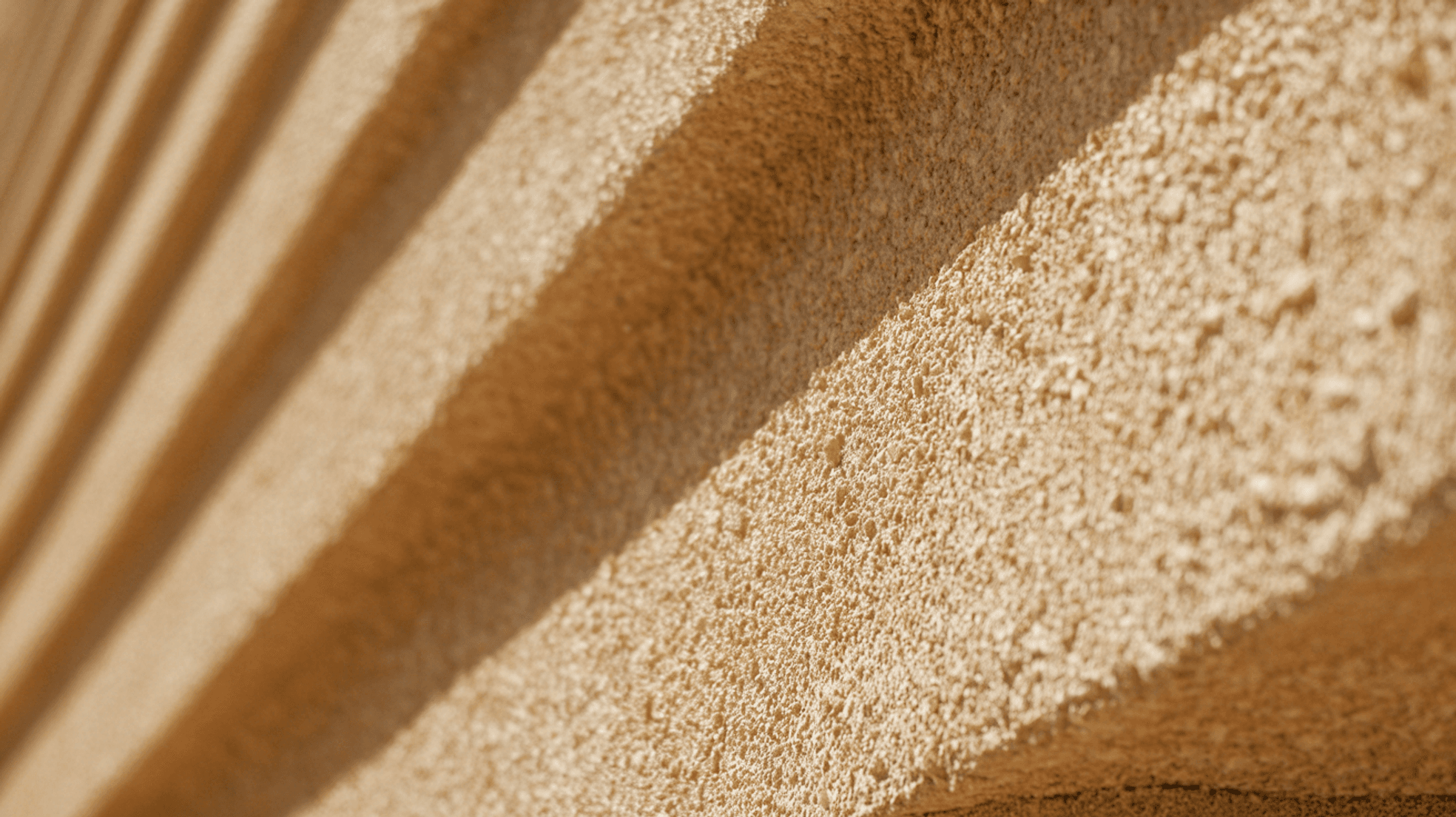
A patch shows through new paint for two reasons. Its texture is different from the wall around it, or it soaks up paint differently and dries with a different sheen. Matching the texture deals with the first, and primer deals with the second.
When in doubt, repaint the entire wall, corner to corner, ceiling to baseboard.
Clean out the damage
Loose stucco, torn drywall paper and crumbling old filler are cut back to solid material, and the dust is brushed off so the patch bonds to the wall.
Fill the crack or hole
The opening is filled with a patching material made for stucco or for drywall. A deep hole is built up in layers and left to set before the next step.
Match the texture
The face of the patch is worked to look like the wall around it, whether that is a sand finish on stucco or an orange peel or knockdown texture on drywall. A smooth patch on a textured wall is what usually gives a repair away.
Prime, then paint the whole surface
The patch is primed so it takes paint the same way as the rest of the wall. Then the paint goes on the whole wall or ceiling, corner to corner, not only the patched spot.
Before the patching
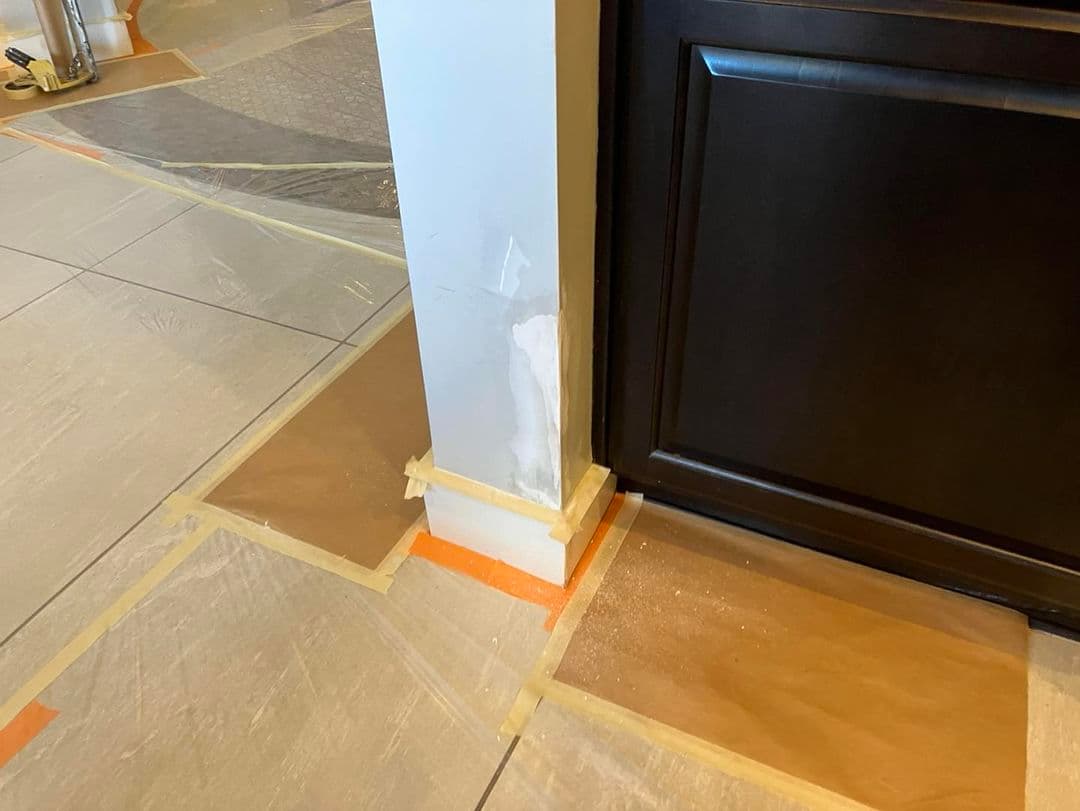
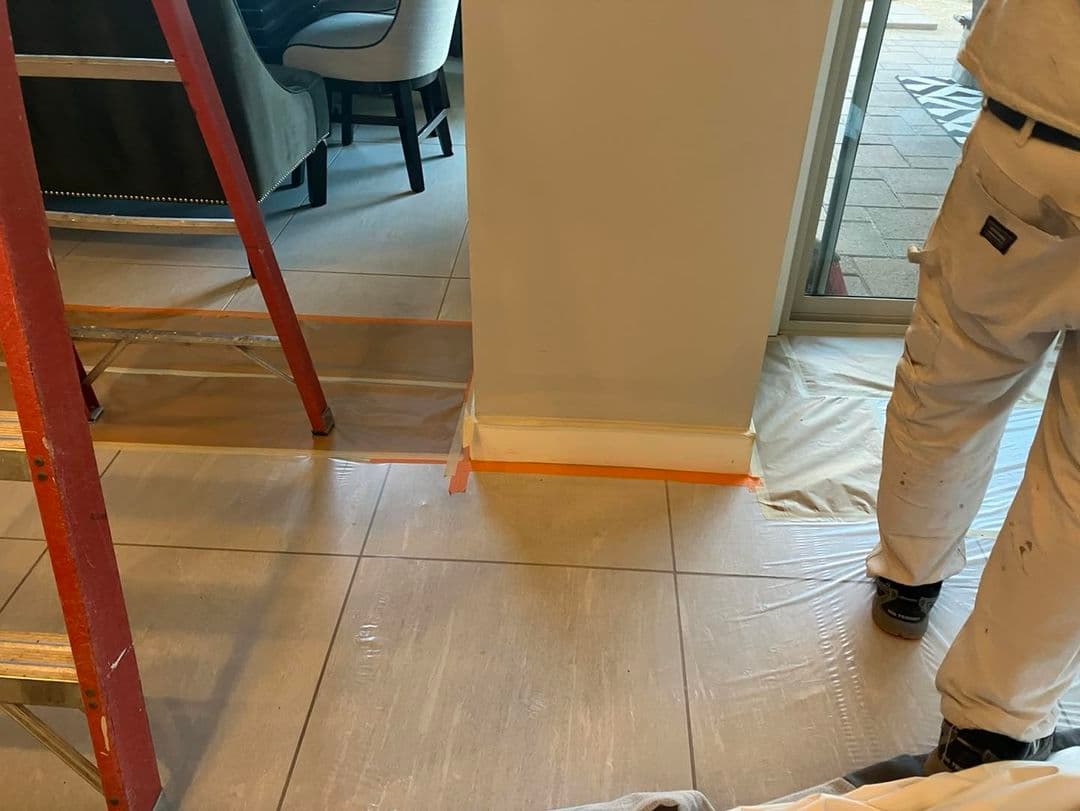
Floors and edges covered before the first patch
Patching and sanding make dust, so the room is set up first. Floors and fixtures are covered, and the edges are masked with paper and tape.
Outside, windows, fixtures and walkways are covered before the stucco work starts. The crew cleans up before they leave.
Want Tim to look at the cracks and holes?
We needed the exterior of our home painted, but it also needed some TLC when it came to the stucco. They did a lot of patchwork and prep, and the finished job looks fantastic.
When Tim gave the quote, he actually walked around the house with me to show all the things they do when they do a paint job. Their attention to detail is incredible, even repairing some of our stucco!
What a patch does not do
When a crack needs more than a patch
A patch and new paint repair the surface you can see. They do not fix what caused the damage.
Movement in the wall, a roof leak or a plumbing leak can keep cracking stucco or staining a ceiling after it has been painted. That kind of problem goes to a roofer, a plumber or another trade first, and the repaint comes after the cause is fixed.
Point out any of these signs at the estimate visit, so Tim can see them before the work is planned.
Signs to point out at the visit
- A crack that opens again after it was patched
- Stucco that sounds hollow or moves when you press on it
- A ceiling stain that is still growing
- Drywall that is soft, sagging or still damp
Questions
What homeowners ask about stucco and drywall repair
Will a stucco or drywall patch show through the new paint?
A patch shows when its texture or its sheen is different from the wall around it. That is why each patch is textured to match the wall, primed, and then painted along with the whole wall or ceiling instead of on its own.
Do you fix holes and dents in drywall before painting a room?
Yes. Nail holes, dents, dings and cracks in the drywall are filled, sanded and textured to match, then primed before the paint goes on. The patching is part of the interior estimate.
Can you paint over a water stain on the ceiling?
Yes, once the source of the water has been fixed. A water stain can show through ceiling paint on its own, so the stain is primed first and then the whole ceiling is painted. Have a plumber or roofer fix the leak before the estimate visit.
Is the stucco and drywall repair on the same estimate as the painting?
Yes. Tim Rochford looks at the stucco, caulk and drywall when he measures, and the repairs are written into the painting estimate, so you can see them before you decide.
Does patching stucco stop water from getting into the wall?
Patched cracks and new caulk close the openings you can see, which is why they come before the paint. A patch and paint are not waterproofing, and a crack caused by movement in the wall can open again. If water is already getting in, have the cause found and fixed before the repaint.
Wondering what a repaint costs? House painting cost

Get an estimate
Get a repaint estimate with the repairs listed
Tell us what needs fixing and what you want painted. Tim Rochford sets up a visit to look at the repairs, measure and write your estimate.
Prefer to talk? Call 480-232-5474
Open Monday to Saturday, 7am to 6pm. Closed Sunday.
5.0 stars from 45 Google reviews
Request your estimate
Name and phone are all we need. Add a note or photos if you like.