
Key Takeaways
- Most Arizona homes need interior repainting every 3 to 7 years depending on room use and sun exposure
- High-traffic areas like hallways and kids’ rooms wear out fastest, often needing touch-ups every 1 to 2 years
- Arizona’s intense sunlight fades paint on south- and west-facing walls faster than you’d expect
- Moisture-prone rooms like bathrooms and laundry areas need paint that resists mold and mildew
- Low-VOC and zero-VOC paints are the standard for interior work, better air quality for your family
- A fresh coat of paint is the most cost-effective way to update your home without a full remodel
After 30 years of helping Arizona homeowners choose the right interior paint colors and finishes, I can tell you this: repainting your walls is the single most impactful update you can make, short of a full remodel. And it costs a fraction of what a kitchen or bathroom renovation runs.
But here’s the question I get asked most often: “How often should I repaint?” The honest answer depends on several factors, how much sun the room gets, how heavily the space is used, the quality of the last paint job, and the type of paint that was applied.
Let me walk you through what I’ve learned from inspecting and repainting hundreds of Arizona homes.
How Often Should I Repaint My Interior Walls in Arizona?
In general, most homes need interior repainting every 3 to 7 years. But that range is wide for a reason. Here’s how I break it down by room:
- Living rooms and dining rooms: 5 to 7 years. These spaces get moderate use and hold up well.
- Bedrooms: 5 to 7 years, unless they’re kids’ rooms, then plan on 3 to 4.
- Hallways and entryways: 3 to 5 years. High traffic means scuffs, fingerprints, and wear near light switches and door handles.
- Kitchens: 3 to 5 years. Grease, steam, and splatters take a toll on paint near cooking areas.
- Bathrooms: 3 to 4 years. Moisture and humidity accelerate wear, especially around showers and tubs.
- Kids’ rooms and playrooms: 2 to 4 years. These rooms take the most abuse, crayons, scuffs, stickers, and everything else life throws at them.
Why Does Arizona Sunlight Affect Interior Paint?
Most people don’t think about it, but Arizona’s intense sunlight damages interior paint too. South-facing and west-facing rooms get the most exposure. Over time, UV rays break down the paint’s pigments and binders, causing fading and chalking.
I’ve walked into homes where the south-facing wall in the living room looked noticeably lighter than the north-facing wall, same room, same paint job, just different sun exposure. If your home has large windows or sliding glass doors facing south or west, expect those walls to fade faster.
Using higher-quality paint with UV-resistant pigments helps. I recommend paints with built-in UV protection for rooms that get heavy sun exposure.
What Signs Tell Me It’s Time to Repaint?
Here’s what I look for when I’m evaluating whether a room needs repainting:
- Fading: Color looks washed out or uneven, especially on sun-exposed walls
- Scuffs and marks that won’t clean: If wiping with a damp cloth doesn’t remove the mark, the paint’s surface is compromised
- Peeling or flaking: Paint lifting from the drywall, often near moisture sources or previous repairs
- Cracking: Fine lines in the paint film, usually from age or movement in the drywall
- Stains: Water marks, grease splatters, or smoke discoloration that won’t prime over cleanly
- Chalking: A powdery residue when you rub the wall, the paint binder is breaking down
If you’re seeing two or more of these signs in the same room, it’s time to repaint. Touching up one wall while the others look worn creates an uneven appearance that’s worse than the original problem.
Which Rooms Need Repainting Most Often?
Not every room ages at the same rate. In my experience, these spaces need attention first:
Kitchens take a beating from cooking grease, steam from boiling water, and splatters from sinks. Paint near the stove and above the backsplash often shows wear first. I recommend a satin or semi-gloss finish in kitchens because they clean more easily than flat paint.
Bathrooms deal with constant moisture. Showers and tubs create steam that softens paint over time. If you notice bubbling or peeling near the ceiling or around the shower, that’s moisture getting behind the paint film. Repainting with a mold-resistant bathroom paint solves this.
Hallways and entryways get the most foot traffic. Light switches, door handles, and baseboards accumulate fingerprints and scuffs. These areas often need a more durable finish, eggshell or satin at minimum.
Kids’ rooms are their own category. Between crayons, markers, stickers, and general wear, these rooms need repainting more frequently. I always recommend a washable, scrubbable paint finish for children’s spaces.
What Type of Paint Should I Use for Interior Walls?
After three decades of testing paints across Arizona homes, here’s what I recommend:
- Living areas and bedrooms: Eggshell or satin finish. These offer a soft sheen that hides imperfections while still being cleanable.
- Kitchens and bathrooms: Satin or semi-gloss. Higher sheen resists moisture and cleans easily.
- Hallways and high-traffic areas: Satin. More durable than flat, easier to touch up than semi-gloss.
- Ceilings: Flat finish. Ceilings don’t need durability, flat paint hides imperfections and reduces glare.
- Trim and doors: Semi-gloss. Provides a durable, easy-to-clean surface that contrasts nicely with wall paint.
For paint quality, I stick with premium brands like Sherwin-Williams and Benjamin Moore. The extra cost per gallon pays for itself in better coverage, longer wear, and fewer repaints down the road.
Are Low-VOC Paints Worth It?
Absolutely. In my opinion, low-VOC and zero-VOC paints should be the standard for interior work. VOCs (volatile organic compounds) are chemicals that off-gas from paint as it dries and cures. They’re what give fresh paint that strong chemical smell.
Modern premium paints from Sherwin-Williams and Benjamin Moore are available in zero-VOC formulations that perform just as well as traditional paints. The difference is in the air quality, your home doesn’t smell like a chemical plant for a week after painting.
This matters especially for homes with children, elderly residents, or anyone with respiratory sensitivities. I use low-VOC paints on every interior project I take on.
Can I Just Touch Up Instead of Repainting the Whole Room?
Sometimes. If the damage is limited to a small area, a scuff, a nail hole, a minor stain, a touch-up can work. But there are conditions:
- You need the exact same paint color and finish. Even slight differences in sheen or color show up under Arizona’s bright light.
- The surrounding paint must be in good condition. Touching up over faded or worn paint creates a visible patch.
- The touch-up area must be properly prepared, cleaned, lightly sanded, and feathered at the edges.
Here’s the problem I see repeatedly: homeowners touch up one wall, and within weeks the touch-up area is visibly different from the rest of the wall. The surrounding paint has faded slightly, and the new touch-up paint stands out like a sore thumb.
When in doubt, repaint the entire wall, corner to corner, ceiling to baseboard. It gives you a consistent, uniform finish that looks professional.
Should I Paint Myself or Hire a Professional?
I get this question often. Here’s my honest take:
If you’re comfortable on a ladder, have patience for prep work, and are painting a simple room with minimal furniture, DIY can work. But there’s a big difference between “I painted my room” and “my room looks like it was painted by a professional.”
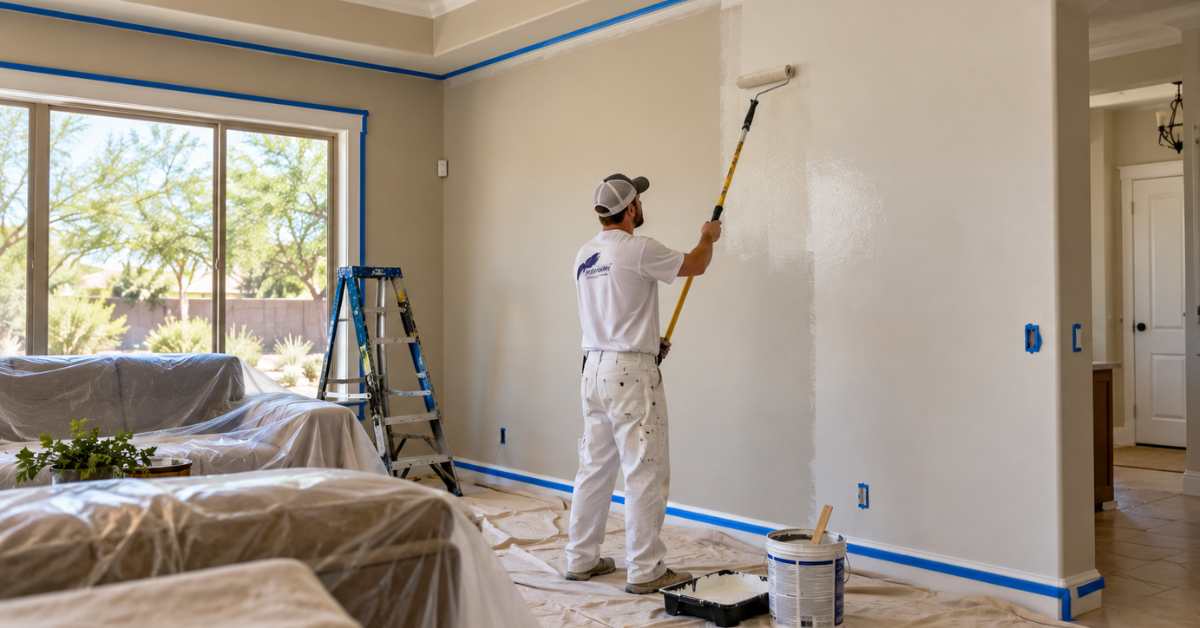
Professional painters bring proper surface preparation, premium tools, and techniques that produce a smooth, even finish without brush marks, roller stipple, or lap lines. We also handle the prep work that most homeowners skip, filling nail holes, sanding rough areas, priming stains, taping clean lines, and protecting floors and furniture.
After 30 years, I can tell you that the difference between a DIY paint job and a professional one shows up within months. DIY paint often chips, peels, or shows wear much faster because the preparation wasn’t thorough enough.
How Much Does Interior Repainting Cost in Arizona?
Interior repainting costs vary based on room size, ceiling height, the amount of prep work needed, and the quality of paint selected. In my experience, most Arizona homeowners spend between $1,500 and $5,000 for a full interior repaint of an average-sized home.
Single rooms typically range from $400 to $1,200 depending on size and conditions. Kitchens and bathrooms often cost more per square foot because of the additional prep work and specialized paints required.
The best way to know what your project will cost is to schedule an estimate. I provide detailed, written estimates that break down preparation, materials, and labor so you know exactly what you’re paying for.
How Do I Choose the Right Paint Color?
This is where I see the most hesitation. Choosing a paint color feels permanent and overwhelming. Here’s what I tell homeowners:
- Don’t choose paint colors from a swatch book alone. Colors look different on your wall than they do on a tiny card under store lighting.
- Get sample pots and paint large swatches directly on your wall. Live with the color for 2 to 3 days. Watch how it changes from morning to evening under Arizona’s light.
- Consider the room’s purpose. Calming neutrals work well for bedrooms. Warmer tones create inviting living spaces. Kitchens and bathrooms can handle bolder choices.
- Think about your existing furnishings. The paint color should complement your furniture, flooring, and countertops, not clash with them.
I offer color consultation as part of my service. After 30 years of matching colors, I can help you narrow down choices and avoid costly mistakes.
What’s the Best Time of Year to Paint Interior Walls in Arizona?
The honest answer: any time. Arizona’s climate is forgiving for interior painting year-round. Unlike homes in humid climates, we don’t have to worry about paint drying too slowly or moisture getting trapped in the walls.
That said, spring and fall are popular times because homeowners are already thinking about home improvement projects. Summer can be busy with vacation schedules. Winter is typically our least busy season, which means more scheduling flexibility.
The best time to repaint is when you’re ready, when you’re looking at your walls and thinking “it’s time.”
Ready to Refresh Your Arizona Home’s Interior?
Repainting your interior walls is the most cost-effective way to transform your home. Whether you’re dealing with faded walls, scuffed hallways, or just ready for a new color, a professional paint job makes a dramatic difference.
iPaint Homes specializes in interior repainting for Arizona homeowners. We handle everything, color selection, surface preparation, premium paint application, and clean-up.
After 30 years of painting Arizona homes, I’ve seen every wall condition imaginable. I know how to prepare surfaces properly, select the right paint for each room, and deliver a finish that looks great and lasts. Contact me today to schedule your interior painting estimate.