
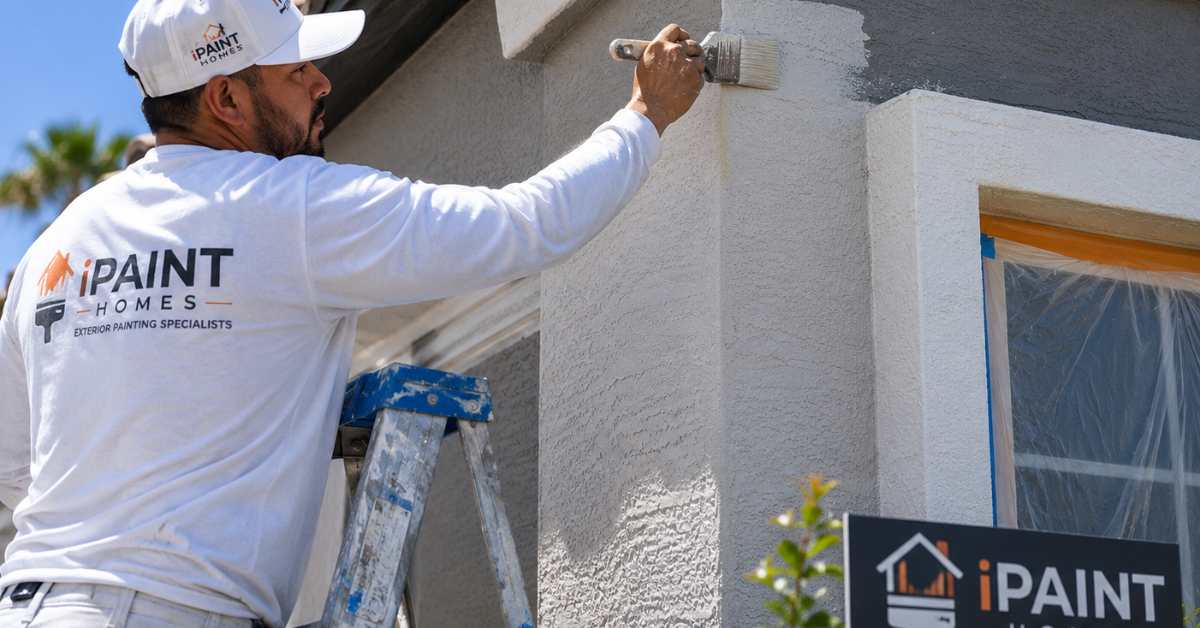
Summer brings long days, warmer temperatures, and more time outdoors. However, it can also bring sudden storms, heavy rain, wind, and higher humidity.
Those weather changes can be hard on your home’s exterior.
Rain does not usually damage a sound, well-maintained paint system right away. The real trouble starts when paint has already faded, cracked, peeled, or separated from the surface below. Once that protective coating weakens, moisture can reach wood, stucco, siding, trim, and other exterior materials.
Over time, that moisture may lead to peeling paint, swollen wood, staining, mildew, and costly repairs.
Understanding the relationship between the summer rainy season and exterior paint can help you catch problems early. It can also help you decide when routine maintenance is enough and when your home needs professional repainting.
At iPaint Homes, we specialize in repainting existing homes. Our team helps homeowners protect and refresh exterior surfaces through careful preparation, quality products, and clean, professional application.
Here are nine important things every homeowner should know before the rainy season reaches its peak.
1. Rain Usually Exposes Existing Paint Problems
Rain is often blamed when exterior paint begins peeling. In many cases, though, the coating had already started to fail.
Exterior paint naturally wears down because of:
- Direct sunlight
- Heat
- Wind
- Dust
- Temperature changes
- Age
- Previous poor preparation
- Repeated moisture exposure
As paint becomes brittle, small cracks and weak areas form. Rainwater can then move through those openings and reach the material underneath.
Therefore, a storm may reveal a problem rather than create it from scratch.
A healthy exterior coating should shed water and protect the surface below. If paint bubbles, flakes, or peels after rain, the system may have lost adhesion or allowed moisture to become trapped.
2. Small Cracks Can Let in More Water Than You Expect
Water does not need a large opening to cause damage.
Hairline cracks around windows, doors, trim boards, fascia, siding joints, and stucco can allow moisture to enter slowly. Since these openings may be difficult to see from the ground, homeowners often overlook them.
Repeated wetting and drying can cause materials to expand and contract. Over time, this movement may lead to:
- Loose trim
- Swollen wood
- Peeling paint
- Cracked caulk
- Surface staining
- Wood rot
- Mold or mildew growth
Pay close attention to areas where two materials meet. These transitions often rely on caulk or sealant to block water.
When caulk becomes brittle, cracked, or separated, it should be repaired before the next round of storms.
3. Humidity Can Be Just as Important as Rain
Rainfall is only part of the summer weather challenge.
High humidity keeps exterior surfaces damp for longer periods. Shaded walls, covered patios, north-facing surfaces, and areas behind dense landscaping may dry more slowly than open sections of the home.
That extra drying time can encourage:
- Mildew growth
- Dark spotting
- Paint discoloration
- Surface contamination
- Premature coating breakdown
Humidity also affects new paint.
Exterior coatings need the right conditions to dry and cure properly. When humidity stays high, drying may slow down. That can leave the finish more vulnerable to rain, dirt, and surface defects.
Professional painters monitor more than the chance of rain. They also consider humidity, surface temperature, air temperature, wind, and the expected drying window.
4. Peeling and Bubbling Paint Need Prompt Attention
Peeling paint is more than a cosmetic issue.
Once paint lifts away from the surface, it no longer provides reliable protection. Water can move behind the loose coating, where it may stay trapped.
Bubbling can indicate several possible problems, including:
- Moisture beneath the paint
- Poor adhesion
- Painting over a damp surface
- Inadequate surface preparation
- Heat-related expansion
- Previous coating failure
Do not simply paint over bubbles or peeling edges.
The loose coating must be removed, and the cause should be identified before new primer or paint is applied. Otherwise, the same problem may return quickly.
Early repairs usually require less work than waiting until large sections fail.
5. Wood Trim Is Especially Vulnerable
Exterior wood often shows rain damage before other surfaces.
Fascia boards, window trim, door trim, porch posts, and decorative wood details can absorb moisture when the paint or caulk begins to fail.
Warning signs include:
- Soft areas
- Swelling
- Splitting
- Dark stains
- Peeling paint
- Cracked joints
- Loose boards
- Visible rot
Wood damage can spread beneath the painted surface, so a quick visual inspection may not reveal the full condition.
Painters should check questionable areas before applying a new coating. Minor damage may be repairable. However, badly rotted wood may need replacement before repainting.
Covering damaged wood with fresh paint may improve its appearance briefly, but it does not restore strength.
6. Stucco Can Also Develop Moisture Problems
Many homeowners assume stucco is unaffected by rain. While stucco handles outdoor exposure well, cracks and failed coatings can still allow water to enter.
Look for:
- Hairline cracks
- Larger structural cracks
- Dark streaks
- Efflorescence
- Bubbling paint
- Flaking coatings
- Stains below windows
- Soft or damaged patches
Efflorescence appears as a white, powdery deposit. It forms when moisture moves through masonry and carries salts to the surface.
Painting directly over active moisture, loose material, or heavy efflorescence rarely produces a lasting result.
The surface must be cleaned, repaired, and allowed to dry. In addition, any source of repeated water entry should be corrected before repainting.
7. Proper Preparation Matters More During Rainy Weather
A durable exterior paint job starts long before the finish coat goes on.
Preparation becomes even more important when a home has already faced rain, humidity, or moisture-related wear.
Professional preparation may include:
- Washing exterior surfaces
- Removing dirt and chalk
- Treating mildew
- Scraping loose paint
- Sanding rough edges
- Repairing cracks
- Replacing failed caulk
- Repairing damaged wood
- Priming bare surfaces
- Allowing materials to dry fully
Each step supports adhesion.
For example, paint applied over chalky siding may stick to the chalk instead of the wall. Paint applied over damp wood may bubble or peel. Likewise, fresh coating over loose paint can fail when the older layer separates.
Preparation takes time, but it helps prevent expensive callbacks and early repainting.
8. Quality Exterior Paint Provides Better Protection
Not all paints offer the same level of weather resistance.
A quality exterior coating is designed to handle sunlight, moisture, heat, wind, and repeated expansion and contraction.
Depending on the product and surface, premium exterior paint may offer:
- Better adhesion
- Improved color retention
- Greater flexibility
- Stronger moisture resistance
- Better UV resistance
- More even coverage
- Longer service life
The right paint also depends on the surface.
Wood, stucco, masonry, siding, trim, doors, and metal features may need different primers or finish products.
A professional repaint specialist selects coatings based on the material, condition, exposure, and existing paint system. That approach gives the new finish a better chance to perform well through changing seasons.
9. Summer Can Still Be a Good Time to Repaint
Many homeowners assume that exterior painting must stop during the summer rainy season.
That is not always true.
Experienced painters can often complete exterior projects successfully by working around weather conditions. The key is careful planning.
Before painting, professionals consider:
The Rain Forecast
Paint needs enough time to dry before rain arrives. The required window varies by product, surface, temperature, and humidity.
Surface Temperature
A wall can be much hotter than the surrounding air, especially in direct sunlight. Paint applied to an overly hot surface may dry too quickly and show lap marks or poor flow.
Humidity
High humidity can slow drying and curing. Painters may adjust the schedule or application plan based on conditions.
Morning Moisture
Dew or overnight rain can leave surfaces damp even when the sky looks clear. Painting should not begin until the surface is ready.
Wind
Strong wind can carry dust, debris, and overspray. It can also make paint dry too quickly.
With the right products and a flexible schedule, summer can still be an excellent time to refresh and protect your home.
Warning Signs to Check Before the Rainy Season
A simple exterior inspection can help you spot developing problems.
Walk around your home and look for:
- Faded or uneven color
- Peeling edges
- Bubbling paint
- Hairline cracks
- Open joints
- Chalking
- Cracked caulk
- Soft wood
- Dark stains
- Mildew
- Rust on metal features
- Damage near gutters
- Water marks below windows
- Loose trim
Check areas that receive the most exposure first.
These often include:
- South- and west-facing walls
- Fascia boards
- Window sills
- Door frames
- Roofline trim
- Garage doors
- Patio posts
- Areas hit by sprinklers
Photos can help you compare changes over time.
Do Not Ignore Failing Caulk
Caulk seals many of the small gaps around a home.
It commonly appears around:
- Windows
- Doors
- Trim joints
- Utility penetrations
- Siding transitions
- Exterior fixtures
When caulk fails, water may move behind the trim or wall finish.
Signs of failure include:
- Cracking
- Shrinking
- Separation
- Missing sections
- Hard or brittle texture
Replacing failed caulk is a small maintenance step that can prevent larger repairs.
However, caulk should not be used to hide structural cracks, active leaks, or damaged materials.
How Gutters Affect Exterior Paint
Gutters play an important role in protecting painted surfaces.
When gutters overflow or leak, water may run repeatedly over fascia, siding, stucco, and trim. That constant exposure can stain walls and shorten paint life.
Check for:
- Clogged gutters
- Loose sections
- Leaking seams
- Poorly placed downspouts
- Water running down walls
- Damaged fascia
- Overflow during storms
Make sure downspouts direct water away from the foundation and painted surfaces.
Cleaning gutters before storm season can reduce unnecessary moisture exposure.
Landscaping Can Trap Moisture Against the House
Shrubs and vines may look attractive, but they can create problems when they grow directly against exterior walls.
Dense landscaping can:
- Hold moisture against paint
- Block airflow
- Scratch painted surfaces
- Hide cracks
- Encourage mildew
- Make inspections difficult
Trim plants back enough to allow air circulation and provide access for maintenance.
Also check sprinkler direction.
Sprinklers that hit the same wall every day can leave mineral stains and keep surfaces damp. Adjusting the spray pattern may extend the life of the paint.
Should You Pressure Wash Before the Rainy Season?
Gentle exterior cleaning can remove dirt, mildew, cobwebs, and chalking. However, high-pressure washing can damage paint, wood, stucco, caulk, and window seals when used incorrectly.
Too much pressure may:
- Lift loose paint
- Force water behind siding
- Damage soft wood
- Etch surfaces
- Break caulk seals
- Drive moisture into cracks
Use a method suited to the surface and its condition.
When preparing for repainting, professional painters select the right cleaning method rather than relying on maximum pressure.
The goal is to clean the surface without creating new damage.
What to Do If It Rains Soon After Painting
Rain on fresh paint does not always ruin the entire project, but it can affect the finish.
Possible problems include:
- Water spots
- Streaks
- Uneven sheen
- Washed-off paint
- Blistering
- Surface marks
- Color variation
The outcome depends on how long the paint dried before the rain, the product used, the temperature, and the amount of moisture.
Do not touch or wipe the surface while it is wet.
Allow it to dry fully. Then inspect the area in daylight. A professional painter can determine whether the coating cured correctly or needs repair.
Simple Maintenance That Helps Exterior Paint Last Longer
Regular care helps preserve your paint and reduce repair costs.
Helpful habits include:
- Inspecting the exterior twice a year
- Checking after major storms
- Washing dirt and mildew
- Keeping gutters clear
- Redirecting sprinklers
- Trimming plants away from walls
- Repairing cracked caulk
- Touching up damaged paint
- Addressing leaks promptly
- Checking wood for softness
- Watching for rust on gates and railings
Small problems are easier to correct before water reaches the surface below.
Why Professional Exterior Painting Lasts Longer
Exterior repainting involves more than applying a new color.
Professional painters evaluate the condition of the entire surface and address issues that could shorten the life of the finish.
They know how to:
- Identify failing paint
- Recognize moisture-related damage
- Prepare different materials
- Select compatible primers
- Monitor weather conditions
- Protect landscaping and hardscape
- Apply consistent coats
- Maintain clean edges
- Avoid overspray
- Follow proper drying times
That experience helps homeowners avoid common problems such as peeling, uneven coverage, missed repairs, and premature failure.
Why Homeowners Choose iPaint Homes
iPaint Homes focuses on repainting existing homes.
We do not treat your home like a new construction project. Existing homes require careful evaluation, preparation, protection, and attention to surfaces that have already faced years of weather and wear.
Our residential painting services include:
- Exterior house painting
- Interior repainting
- Trim painting
- Door painting
- Garage door painting
- Fence and gate painting
- Surface preparation
- Minor paint-related repairs
Homeowners choose iPaint Homes for:
- Thorough preparation
- Quality exterior paints
- Experienced residential painters
- Clear communication
- Reliable scheduling
- Clean job sites
- Care around landscaping and property
- Smooth, even finishes
- Long-lasting results
Whether your exterior paint has faded, cracked, or begun peeling after seasonal storms, our team can help restore its appearance and protection.
Frequently Asked Questions
Can summer rain damage exterior paint?
Rain can damage paint that is still drying or paint that has already begun to fail. Sound, fully cured exterior paint should resist normal rain exposure.
How soon can it rain after exterior painting?
Drying requirements vary by product, temperature, humidity, and surface. Professional painters follow the coating manufacturer’s instructions and monitor the forecast before application.
Does high humidity cause exterior paint to peel?
Humidity alone does not always cause peeling. However, it can slow drying and keep surfaces damp. Combined with poor preparation or trapped moisture, it can contribute to coating failure.
Should I repaint before the rainy season?
If the paint is cracked, peeling, chalky, or exposing bare surfaces, repainting before heavy seasonal rain may help prevent further damage.
Can painters work during the summer rainy season?
Yes. Exterior painting can often continue during summer when painters schedule around rain, humidity, wind, and surface temperature.
Can mold or mildew grow on exterior paint?
Yes. Mildew often develops on shaded surfaces that remain damp. Cleaning and improved airflow can help, but recurring growth may indicate a moisture problem.
How often should I inspect my exterior paint?
Inspect it at least twice each year and after severe storms. Pay extra attention to trim, caulk, fascia, windows, doors, and areas near sprinklers.
Should I paint over hairline stucco cracks?
Cracks should be evaluated and repaired with an appropriate material before painting. Simply covering them may allow the crack to reappear.
How long does exterior paint last?
Paint life depends on preparation, product quality, surface type, sun exposure, weather, color, and maintenance. Routine inspections and timely repairs can help it last longer.
Final Thoughts
The connection between the summer rainy season and exterior paint is about much more than appearance.
Paint protects your home from moisture, sunlight, heat, and everyday weather exposure. Once that coating begins to crack, peel, or separate, rain can reach the material underneath and speed up the damage.
The nine most important things homeowners should remember are:
- Rain often reveals existing paint failure.
- Small cracks can allow significant moisture entry.
- Humidity can slow drying and encourage mildew.
- Peeling and bubbling need prompt attention.
- Exterior wood is especially vulnerable.
- Stucco can also develop moisture problems.
- Careful preparation helps paint last longer.
- Quality exterior paint offers better protection.
- Summer can still be a good time to repaint.
Regular inspections, timely repairs, and professional repainting can help prevent small issues from becoming expensive exterior damage.
At iPaint Homes, we specialize in repainting existing homes. Whether your property needs a complete exterior refresh or attention after seasonal storms, our experienced team provides careful preparation, quality workmanship, and finishes designed to keep your home looking beautiful and protected.