
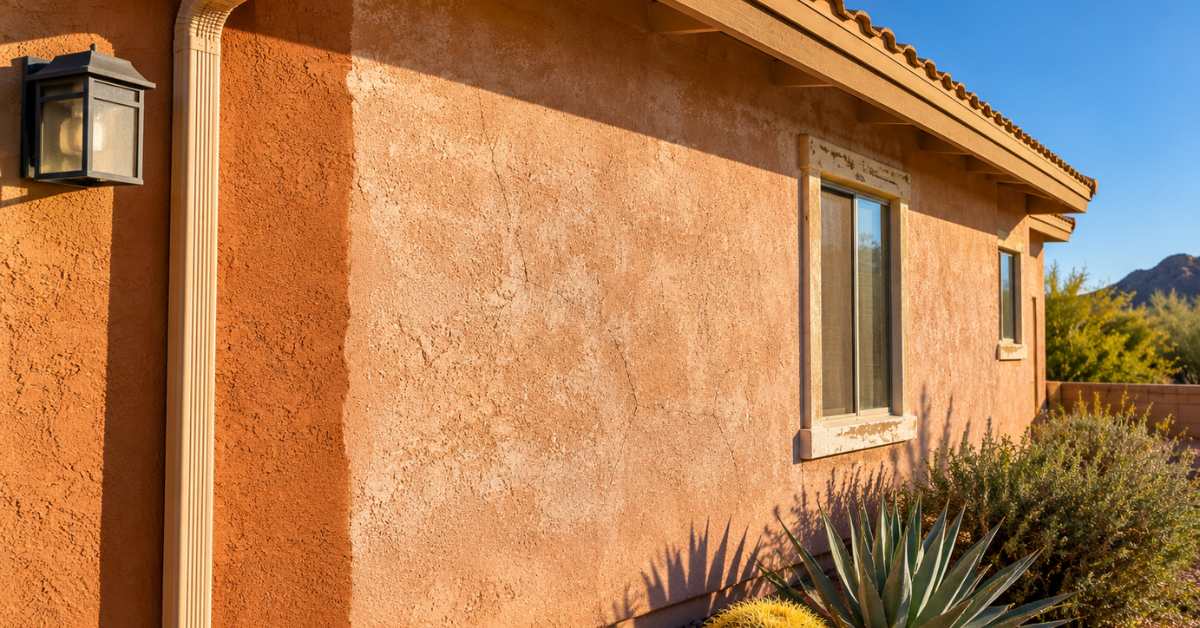
Key Takeaways
- Arizona’s UV index is among the highest in the country, exterior paint faces constant degradation from intense sunlight
- UV damage shows as fading, chalking, and brittleness, the paint film breaks down and loses its protective ability
- West- and south-facing walls age fastest, expect to repaint those surfaces more frequently
- Premium paints with UV-resistant pigments last significantly longer than budget alternatives
- Proper surface preparation is critical, paint won’t bond to chalky, degraded surfaces
- Regular washing and maintenance can extend the life of your exterior paint by years
In my 30 years of evaluating exterior finishes across Arizona, I’ve learned that ultraviolet radiation is the single most destructive force your home’s paint faces. Not rain. Not wind. Not temperature swings. UV rays.
Arizona sits at a high elevation with clear skies most of the year. We get more than 300 sunny days annually, and our UV index regularly hits extreme levels, especially in summer. That’s great for solar energy and winter visitors. It’s brutal for exterior paint.
Every day, ultraviolet radiation breaks down the chemical bonds in paint films. The pigments fade. The binders weaken. The surface becomes brittle and chalky. Over time, the paint loses its ability to protect the substrate underneath, whether that’s stucco, wood, or metal.
Let me walk you through what UV damage looks like, which areas of your home are most vulnerable, and what you can do about it.
How Does UV Radiation Damage Exterior Paint?
Paint is a chemical coating. When ultraviolet light hits it, the energy breaks molecular bonds in both the pigments (which give paint its color) and the binders (which hold the paint together and make it stick to surfaces).
Here’s the progression I see on Arizona homes:
- Fading: Colors lose their intensity. Dark colors turn lighter. Bright colors look washed out. This is usually the first sign.
- Chalking: The paint surface develops a powdery residue. If you rub the wall and chalk comes off on your hand, the binder is breaking down.
- Brittleness: The paint film loses flexibility. It becomes rigid and starts to crack, especially on surfaces that expand and contract with temperature changes.
- Peeling and flaking: Once the binder fails completely, the paint loses adhesion. It lifts from the surface in sheets or flakes.
This isn’t a matter of if, it’s a matter of when. Every exterior paint job in Arizona will eventually show UV damage. The question is how long it takes.
Which Walls Fade Fastest in Arizona?
Not all walls age at the same rate. Sun exposure varies dramatically depending on which direction the wall faces.
West-facing walls take the most abuse. They get intense afternoon sun, the hottest, most direct light of the day. I’ve inspected homes where the west side looked five years older than the east side, even though they were painted at the same time.
South-facing walls get strong, direct light throughout the day. They fade faster than north or east walls, though not quite as fast as west-facing surfaces.
North-facing walls get the least direct sun. They hold their color longest and often look noticeably better than other sides of the house.
East-facing walls get morning sun, which is less intense than afternoon exposure. They typically hold up better than west or south walls.
When I’m evaluating a home for repainting, I always compare the different exposures. If one side looks significantly worse, that tells me the paint is failing from UV exposure rather than a product defect or application error.
What Does UV Fading Look Like?
Fading isn’t always obvious at first. Here’s what I look for:
- Color shift: The paint looks lighter or duller than it did originally. Dark colors may look grayish. Bright colors may look pastel.
- Uneven appearance: Areas under eaves, behind downspouts, or in shaded spots may look darker than exposed areas. This creates a patchy, uneven look.
- Chalking: A powdery residue on the surface. This is the binder breaking down and oxidizing.
- Loss of sheen: Semi-gloss and satin finishes may look flat and dull after years of UV exposure.
If you’re noticing any of these signs, the paint is degrading. It may still be protecting the surface underneath, but it’s approaching the end of its effective life.
Does Paint Color Affect How Fast It Fades?
Yes. Dark colors absorb more UV energy and fade faster than light colors. That’s basic physics, darker pigments absorb more light across the spectrum, which means more energy hitting the paint film.
I’ve seen dark brown and deep red exteriors fade noticeably within three to four years in full Arizona sun. Light tans, beiges, and whites hold their color much longer, often five to seven years before showing significant fading.
That doesn’t mean you should avoid dark colors. It means you should expect to repaint dark-colored exteriors more frequently, and you should use the highest-quality paint you can afford. Premium pigments resist fading better than budget alternatives.
What Type of Paint Holds Up Best Against UV Damage?
Not all paints are created equal when it comes to UV resistance. Here’s what I recommend for Arizona exteriors:
- 100% acrylic latex paints: These offer the best combination of flexibility, adhesion, and UV resistance. They expand and contract with temperature changes without cracking.
- Premium pigments: Higher-quality paints use more stable pigments that resist fading. Sherwin-Williams Duration, Emerald, and Benjamin Moore Aura are examples of paints with excellent UV resistance.
- Higher sheen levels: Semi-gloss and satin finishes reflect more light than flat finishes, which can reduce UV absorption slightly. But the difference is minor compared to paint quality.
- UV-inhibitor additives: Some premium paints include UV inhibitors that slow the breakdown of the paint film. These are worth the extra cost for west- and south-facing walls.
I don’t recommend budget paints for Arizona exteriors. The savings per gallon are small compared to the cost of repainting two or three years earlier than necessary.
How Can I Tell If My Paint Is Failing from UV Damage?
Here’s my inspection process when I’m evaluating an Arizona home’s exterior:
- Rub the surface. If chalk comes off on your hand, the binder is breaking down. Light chalking is normal on older paint. Heavy chalking means the paint is near the end of its life.
- Look for fading patterns. Compare exposed areas with shaded areas. If there’s a dramatic difference, UV damage is the cause.
- Check for cracking. Fine cracks in the paint film indicate brittleness from UV degradation. This is especially common on wood trim and fascia.
- Test adhesion. Press a piece of tape to the surface and pull it off. If paint comes off with the tape, adhesion has failed.
- Examine different exposures. West and south walls should show more wear than north and east walls. If all walls look equally bad, the issue may be poor preparation or low-quality paint rather than normal UV aging.
These tests help me determine whether the home needs a full repaint, targeted maintenance, or if the existing paint still has life left.
How Can I Protect My Exterior Paint from UV Damage?
You can’t stop UV damage entirely, it’s a fact of living in Arizona. But you can slow it down significantly.
Use premium paint. This is the single most important factor. High-quality paints with UV-resistant pigments and durable binders last years longer than budget alternatives.
Prepare the surface properly. Paint won’t bond to chalky, degraded surfaces. Old paint must be cleaned, sanded, and primed before applying new coats. Skipping preparation is the most common reason paint fails early.
Wash the exterior regularly. Dust, dirt, and pollutants accelerate paint breakdown. Washing the exterior every 12 to 18 months removes contaminants and extends paint life.
Apply protective coatings. Clear UV-resistant topcoats can extend the life of stained wood and some paint finishes. These need to be reapplied every few years, but they add an extra layer of protection.
Provide shade where possible. Trees, awnings, and pergolas reduce direct sun exposure on walls. Even partial shade makes a difference.
How Often Should I Repaint in Arizona’s Climate?
Based on three decades of inspecting Arizona homes, here’s what I recommend:
- Stucco walls: 7 to 10 years with premium paint and proper preparation. Stucco holds paint well because it’s stable and doesn’t expand/contract much.
- Wood trim and fascia: 5 to 7 years. Wood moves with temperature changes, which stresses the paint film. West-facing trim may need attention sooner.
- Doors and garage doors: 5 to 8 years depending on material and exposure. Metal doors hold paint well. Wood doors need more frequent attention.
- Fences and gates: 3 to 5 years. These get full sun exposure and often get hit by irrigation spray, which accelerates wear.
These are guidelines, not rules. The actual lifespan depends on paint quality, preparation, exposure, and maintenance. I’ve seen premium paint jobs last 12 years on north-facing stucco walls. I’ve also seen budget paint fail in three years on west-facing wood trim.
What Happens If I Wait Too Long to Repaint?
I get it, repainting is an expense. But waiting too long costs more in the long run. Here’s why:
Once paint fails, the substrate underneath is exposed to UV radiation, moisture, and temperature swings. Stucco can crack and degrade. Wood can rot. Metal can rust. What would have been a straightforward repaint becomes a repair project plus a repaint.
I’ve inspected homes where owners waited so long that wood fascia had to be completely replaced before painting. The cost of replacing rotted wood was three times the cost of repainting would have been five years earlier.
Paint is protective coating. When it fails, you lose that protection. The sooner you address it, the less damage occurs underneath.
Is Pressure Washing Safe for Removing Chalky Paint?
Pressure washing can remove loose, chalky paint and clean the surface before repainting. But it must be done carefully. Too much pressure damages stucco, gouges wood, and forces water behind the surface.
I use low-pressure washing (around 500 to 800 PSI) combined with appropriate cleaning solutions. The goal is to remove contaminants and loose material without damaging the substrate.
After washing, the surface must dry completely before painting. In Arizona’s dry climate, that usually takes 24 to 48 hours. Painting over damp surfaces traps moisture and causes paint failure.
Can I Paint Over Faded Paint Without Priming?
Sometimes. If the existing paint is in good condition, no chalking, no peeling, no cracking, you can often apply a new coat directly over it. Clean the surface thoroughly first to remove dirt and contaminants.
But if the surface is chalky, you need a primer. Paint won’t bond to chalk. The new coat will peel or flake within months. I use high-quality bonding primers on chalky surfaces to create a stable base for the finish coats.
If you’re unsure whether the surface needs primer, do a simple test. Press a piece of clear tape to the wall and pull it off. If paint or chalk comes off with the tape, primer is necessary.
Ready to Protect Your Arizona Home from UV Damage?
After 30 years of evaluating and repainting Arizona exteriors, I know what holds up, and what doesn’t. iPaint Homes uses premium paints, proper preparation, and proven techniques to deliver finishes that last.
We evaluate your home’s current condition, identify areas of UV damage, and recommend the best approach for long-lasting protection. Whether you need a full repaint or targeted maintenance on weathered walls, we handle it with care and attention to detail.
If your home’s exterior is looking faded, chalky, or worn, it might be time for a fresh coat. Contact us for an estimate, I’ll come out, assess your home’s specific needs, and give you an honest recommendation on what needs attention now and what can wait.