
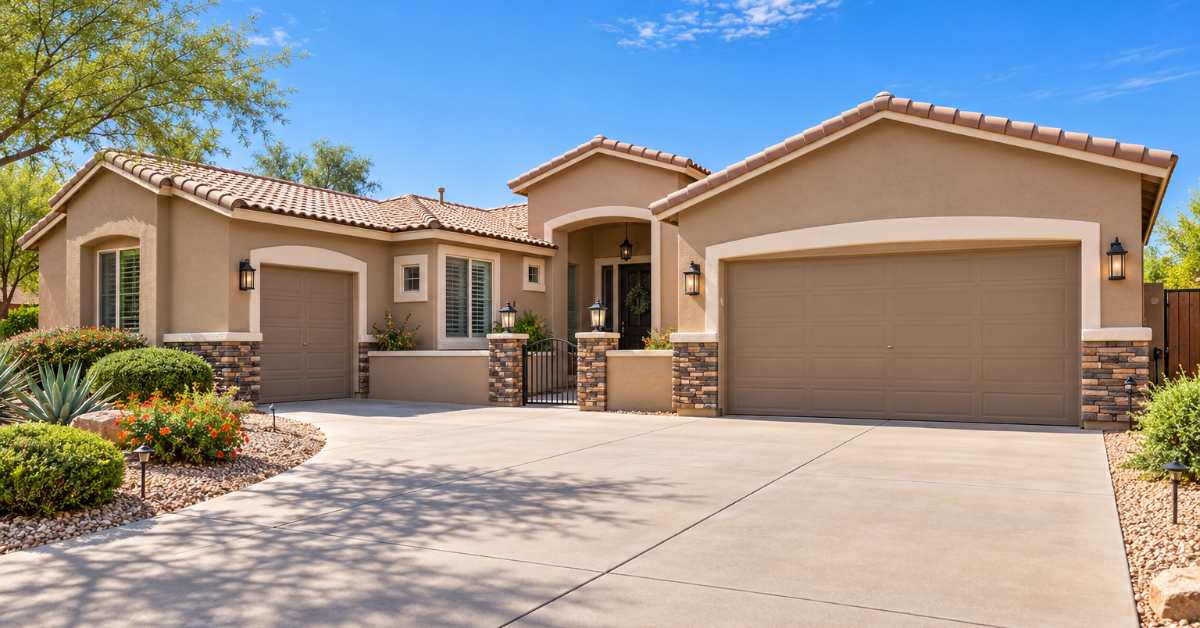
After 30 years of painting Arizona homes, I can tell you this, exterior paint is doing a lot more for your house than you probably realize.
Most homeowners think of a fresh coat of paint as a cosmetic upgrade. But in my three decades of matching colors and selecting finishes for Arizona exteriors, I’ve seen what happens when that protective layer fails. It’s not about curb appeal, it’s about shielding your home from some of the harshest exterior conditions in the country.
Arizona’s climate combines over 300 days of intense sunshine, summer temperatures exceeding 110°F, monsoon storms with wind-driven rain, and frequent dust storms. Every one of these conditions attacks your home’s exterior. A quality repaint restores the protective barrier. Here’s exactly how it works.
How does exterior paint protect Arizona homes from the sun?
Exterior paint acts as a shield against ultraviolet (UV) radiation. Arizona receives more UV exposure than nearly any other U.S. region, and those rays break down paint binders, fade pigments, and degrade the stucco or wood underneath.
In my experience, UV damage is the number one cause of exterior paint failure in this valley. South-facing and west-facing walls show it first because they absorb the most direct sunlight. Fascia, trim, front doors, and garage doors deteriorate even faster due to their orientation and material.
A quality exterior coating absorbs and reflects UV rays before they reach the substrate. No paint lasts forever, eventually, fading and chalking signal that the finish needs replacement. The key is repainting before the substrate underneath begins deteriorating.
Does exterior paint protect stucco in Arizona?
Yes. Paint creates a critical protective barrier over stucco, which is the most common exterior material on Arizona homes. Without paint, stucco directly absorbs UV radiation, accumulates dust, and takes on moisture during monsoon season.
A properly painted and sealed stucco surface resists daily weathering and lasts significantly longer than unpainted stucco. As the coating ages, small cracks, old repairs, and surface chalking become visible, these are signs the protective layer is wearing thin.
In my 30 years, I’ve learned that repaint longevity depends almost entirely on preparation. New paint performs best over a clean, stable, properly repaired surface. Skipping preparation is the number one reason paint jobs fail prematurely in Arizona’s climate.
How does extreme Arizona heat affect exterior paint?
Exterior surfaces in Arizona can reach 150°F to 180°F in direct summer sunlight, that’s 40 to 70 degrees hotter than the ambient air. After sunset, those same surfaces cool rapidly.
This daily cycle of expansion and contraction repeats thousands of times per year. That thermal stress puts mechanical force on paint film, caulk, and building materials, causing cracking, peeling, and separation at joints and edges.
Paint products formulated specifically for extreme thermal cycling resist this damage better than standard coatings. That’s why I recommend high-elasticity exterior paints designed for desert temperature extremes, they flex with the substrate instead of cracking apart.
What happens to exterior wood in Arizona without paint protection?
Unpainted exterior wood in Arizona deteriorates rapidly. The intense UV exposure dries wood fibers out, then monsoon moisture hits that same bare surface. This extreme cycle of drying and sudden wetting causes wood to crack, warp, split, and rot, often within a single season.
Fascia boards, window trim, door frames, and decorative wood details are the most vulnerable. Once you spot bare wood anywhere on your exterior, address it immediately. Depending on the damage, repair may require scraping, sanding, priming, patching, or full board replacement before repainting.
I’ve saved wood with a timely repaint, and I’ve replaced wood that an owner neglected too long. The difference is always timing, and the cost of replacement far exceeds the cost of maintenance.
How does monsoon rain damage Arizona home exteriors?
Arizona receives most of its annual rainfall during monsoon season, from June through September. These storms bring heavy rain combined with strong winds, and wind-driven rain reaches areas that normally stay dry.
Failed caulk, open joints, cracked paint, and deteriorated sealants become entry points for water. Once moisture penetrates behind stucco, trim, or window frames, it causes interior damage, mold growth, and structural deterioration.
Here’s what I want every Arizona homeowner to understand clearly: exterior paint provides surface water resistance, but it cannot fix an active leak or failed building component. Water intrusion requires repair first, then paint protects the restored surface. I’ve made that call on hundreds of jobs, it’s always the right approach.
Why is caulking just as important as the paint itself?
Caulk and paint work as a single system. Caulk seals gaps around windows, doors, trim, and material transitions, places where different building components meet. Without proper caulking, paint alone cannot prevent water and dust infiltration.
Arizona’s heat dries caulk out over time. It cracks, shrinks, splits, and pulls away from surfaces. Once caulk fails, water and dust penetrate sealed areas, undermining the paint system above.
In every repaint project we do, replacing failed caulk is a non-negotiable step. It closes vulnerable gaps before new paint goes on, creating a complete weather-resistant barrier. Skipping caulking is one of the most common, and most costly, shortcuts I see from contractors who rush the job.
How does paint protect against Arizona dust and wind?
Arizona’s wind carries dust, sand, and debris that abrade exterior surfaces daily. Monsoon storms blow dirt against walls, fascia, and trim. Paint serves as the first line of defense, it absorbs this wear so the structural materials underneath don’t have to.
A sound coating creates a uniform, cleanable surface that resists dust accumulation better than deteriorated, chalky paint. Regular exterior cleaning maintains the finish, but aggressive pressure washing damages paint and stucco. Gentle cleaning methods preserve the coating while removing accumulated dirt.
When paint becomes heavily chalked or worn, cleaning alone won’t restore protection. That’s when a fresh coat renews both the appearance and the defensive barrier.
Can a new paint job hide old exterior repairs?
Yes. Older Arizona homes accumulate stucco patches, crack repairs, replaced trim sections, and touch-ups that don’t match the surrounding surface. As paint fades over time, these repairs become increasingly visible.
A full exterior repaint creates a consistent, uniform appearance across the entire surface. The key is correcting loose or failing repairs before the new coating goes on, otherwise, the new paint simply highlights existing imperfections.
Done properly, a repaint makes the house look like it did when it was new. I’ve had homeowners tell me they couldn’t believe how much of a difference it made, especially on homes that had gone 15 or 20 years without professional attention.
What is paint chalking, and is it a sign of failure?
Chalking is a powdery residue that forms on the surface of aging paint. It’s a natural part of how many exterior paints wear, the binder breaks down, leaving loose pigment on the surface. You’ll notice it when you rub your hand across a wall and it comes away dusty.
Light chalking is normal wear. Heavy chalking, where the residue is thick and the underlying color looks washed out, indicates the paint film is breaking down and losing its protective properties.
Chalking is accelerated by Arizona’s intense UV exposure. West- and south-facing walls chalk first and most heavily. When chalking becomes noticeable, it’s time to start planning a repaint before the substrate loses protection entirely.
Why do fascia and trim fail before stucco walls?
Fascia and trim take more direct sun exposure than main wall surfaces and sit near roof edges where weathering is most intense. They also tend to be wood or engineered wood, which deteriorates faster than stucco under UV and moisture stress.
When I assess an Arizona home, here’s what I check on fascia and trim:
- Color fading compared to wall surfaces
- Paint peeling or flaking
- Cracking in the paint film
- Exposed bare wood
- Failed or missing caulk at joints
- Soft, rotted, or damaged areas
Keeping fascia and trim painted and sealed is one of the most cost-effective maintenance steps an Arizona homeowner can take. I’ve seen fascia that needed a simple repaint turn into a full board replacement because it was neglected for too long.
Do garage doors and front doors need protective paint?
Yes. Garage doors and front doors present large, flat surfaces that absorb hours of direct Arizona sunlight daily. Garage doors fade unevenly due to panel orientation. Front doors lose color and sheen, especially on south-facing entries. Dark colors show these changes even more dramatically.
Repainting these surfaces restores both the protective coating and the appearance. Because doors make up a significant portion of your home’s visible exterior, refreshing them creates a noticeable improvement in overall curb appeal.
Homeowners are often surprised how much difference repainting just the garage door and front entry makes to the whole look of the house, and how much better those surfaces perform against weather once the protective layer is renewed.
Does good exterior paint make dust easier to clean?
A sound exterior coating creates a smoother, more uniform surface than deteriorated, chalky paint, and that makes routine cleaning more effective. Dust and dirt sit on top of a good paint film rather than embedding into a degraded surface.
However, cleaning must be done carefully. Excessive pressure damages paint and stucco. And if the coating has become heavily chalked or worn, washing alone won’t restore its protective properties. At that point, repainting is the solution, not more cleaning.
How does exterior painting protect your home’s value?
Exterior maintenance is an investment in your home’s structural integrity, not just its appearance. Peeling paint, exposed wood, failed caulk, and neglected repairs allow small problems to become major ones over time.
Repainting at the right time renews the protective barrier before deterioration spreads. This is especially important on older Arizona homes that have already endured decades of intense sun and weather exposure.
The cost of a professional repaint is a fraction of the cost of the stucco repair, wood replacement, or moisture damage it helps you avoid. I’ve seen homeowners spend thousands on structural repairs that a timely repaint would have prevented entirely.
Why is surface preparation the most critical step in repainting?
Preparation determines how long a repaint will last. In my 30 years, this is the single biggest difference I’ve seen between a paint job that endures and one that fails within a few years.
Arizona home exteriors accumulate multiple wear conditions over time:
- Chalking and pigment degradation
- Old repairs and patches
- Peeling and flaking paint
- Surface cracks
- Failed caulk at joints and transitions
- Exposed or damaged wood
- Dust and dirt buildup
- Mismatched previous touch-ups
Proper preparation addresses every one of these conditions before new paint goes on. Depending on the home, this includes washing, scraping, sanding, patching, caulking, and spot priming. A durable finish starts with a properly prepared surface, there are no shortcuts. That’s a lesson I learned early, and it’s one I’ve never compromised on.
What can’t exterior paint fix?
I believe homeowners deserve honesty about what paint can and cannot do. Exterior paint protects and improves a sound surface. But it cannot:
- Repair structural cracks in stucco or foundation
- Stop an active roof leak
- Fix rotted wood, damaged material must be replaced first
- Solve moisture intrusion coming from behind a wall
- Bridge gaps where building components have separated
These issues require repair before paint can protect the restored surface. I’d rather be honest with a homeowner than sell them a paint job that won’t solve their real problem. That’s how you build trust over 30 years in this business.
What are the exact signs my Arizona home needs repainting?
You don’t have to wait until the exterior looks severely deteriorated. Here are the signs I tell every homeowner to watch for:
- Noticeable color fading, especially on south and west walls
- Heavy chalking, powdery residue when you touch the surface
- Paint peeling or flaking away from the substrate
- Cracking in the paint film
- Failed, cracked, or missing caulk around windows and joints
- Exposed bare wood on fascia, trim, or doors
- Worn or damaged fascia boards
- Uneven patches from old repairs showing through
- Bubbling or blistering paint, often a sign of moisture underneath
When several of these signs appear together, it’s time to plan a professional exterior repaint. The sooner you address it, the less preparation, and less expense, the project requires.
How often should Arizona homes be repainted?
Most Arizona homes need repainting every 8 to 12 years, depending on several factors:
- Sun exposure: South- and west-facing walls degrade faster
- Paint quality: Higher-grade paints with UV resistance last longer
- Surface preparation: Proper prep extends coating lifespan significantly
- Material type: Stucco holds paint longer than wood fascia and trim
- Microclimate: Homes in areas with more monsoon exposure may need more frequent attention
Homes that receive regular maintenance, touching up caulk, addressing small areas of peeling promptly, cleaning gently, often stretch toward the upper end of that range. Homes that go unattended may need attention sooner.
Exterior painting for existing Arizona homes
Arizona’s desert climate is hard on every exterior surface. Over 300 days of intense sunshine, summer heat exceeding 110°F, monsoon storms with wind-driven rain, and constant dust exposure all combine to degrade building materials over time.
A quality exterior repaint restores the protective barrier between those conditions and your home’s structure. It prevents UV damage, shields stucco, protects wood from drying and rot, seals out monsoon moisture, and maintains a clean, consistent appearance.
At iPaint Homes, we specialize in repainting existing Arizona homes. We evaluate the current finish, identify worn or damaged areas, prepare surfaces based on their actual condition, and apply a clean, consistent new coating. That’s what we’ve done for three decades, and it’s what we do best.
If your home’s exterior is showing fading, chalking, cracking, or weathering, a professional repaint restores both the appearance and the protection your home needs in Arizona’s demanding climate. Give me a call, I’d be happy to take a look and give you my honest assessment.