
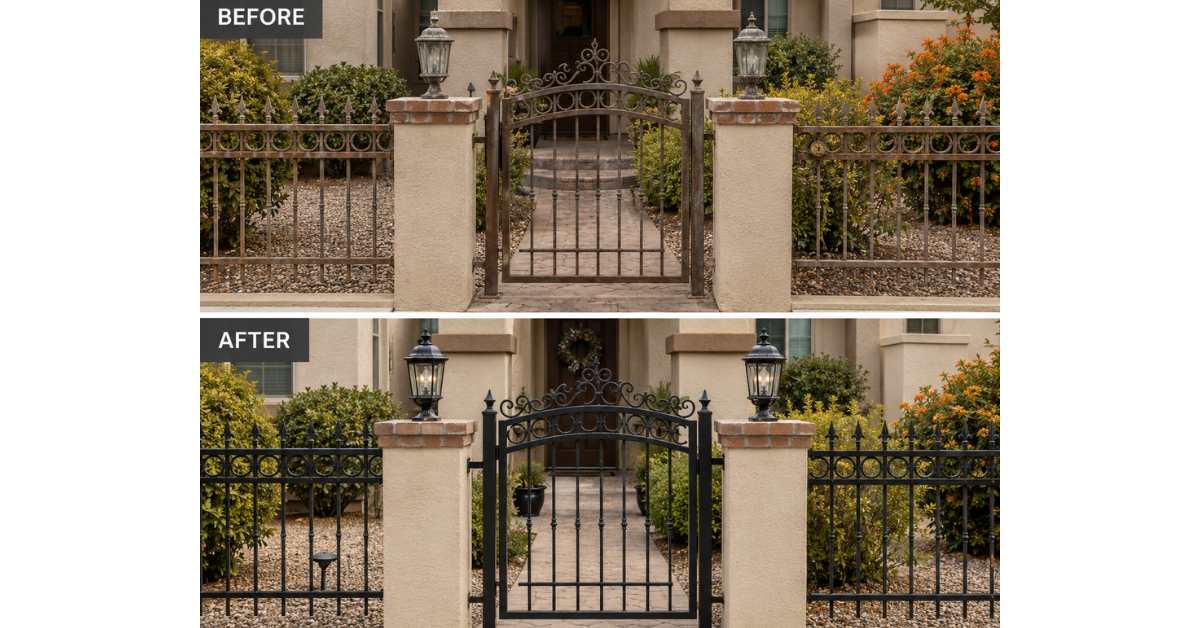
A beautifully painted home can still feel incomplete if the fence or front gate has faded paint, peeling finishes, or visible rust.
Your fence frames your property. Your front gate welcomes every guest who visits. Together, they play a larger role in curb appeal than many homeowners realize.
Unfortunately, these surfaces also receive some of the harshest exposure around your home. Unlike covered walls, fences and gates spend every day exposed to direct sunlight, rain, irrigation systems, dust, wind, and changing temperatures. Over time, even quality paint begins to wear, leaving wood vulnerable to moisture and metal vulnerable to corrosion.
Professional fence and gate painting does far more than improve appearance. It helps protect your investment, extends the life of outdoor materials, and creates a clean, finished look that complements the rest of your home.
At iPaint Homes, we specialize in repainting existing homes, not new construction. Our exterior painting services include wood fences, wrought iron fences, entry gates, privacy fences, and decorative metal gates. Every project begins with careful preparation so the finished coating looks beautiful and lasts as long as possible.
9 Smart Reasons to Repaint Your Fence and Gate
1. Fresh Paint Instantly Improves Curb Appeal
Your fence often creates the first impression of your property.
Whether someone is driving past your home, walking to the front door, or visiting your backyard, worn paint can make the entire property feel older and less maintained.
Fresh paint helps create a cleaner, more welcoming appearance by:
- Brightening faded surfaces
- Restoring uniform color
- Covering stains and weathering
- Highlighting decorative details
- Complementing landscaping
- Creating a finished border around your property
Even repainting with the same color can dramatically improve how well your home presents itself.
Many homeowners are surprised by how much newer their entire property looks after repainting the fence and gate.
2. Paint Protects Against Arizona’s Intense Sun
Arizona sunshine is one of the biggest reasons exterior paint eventually fails.
Ultraviolet rays gradually break down paint films, causing:
- Fading
- Chalking
- Brittleness
- Cracking
- Loss of color
- Reduced protection
Dark colors often absorb more heat, while lighter colors may show fading differently over time.
Professional exterior coatings are designed to resist UV exposure far better than interior products or lower-quality paints.
Choosing the correct exterior paint helps maintain both appearance and protection for years.
3. A Protective Coating Helps Prevent Moisture Damage
Although Arizona has a dry climate, outdoor surfaces are still exposed to moisture.
Sprinklers, monsoon storms, humidity, morning dew, and irrigation systems all place stress on fences and gates.
When paint begins to fail, moisture can reach the material underneath.
On wood, this may contribute to:
- Swelling
- Warping
- Splitting
- Rot
- Mold or mildew
On metal, moisture may lead to:
- Surface rust
- Corrosion
- Paint lifting
- Structural deterioration over time
A professionally applied exterior coating creates a protective barrier that helps reduce direct exposure to moisture.
The key is repairing existing damage before new paint is applied.
Painting over active rust or deteriorated wood only delays the problem.
4. Repainting Costs Less Than Replacing
Replacing an entire fence or custom gate can be a significant expense.
Routine repainting helps extend the life of existing materials, allowing homeowners to postpone replacement while maintaining an attractive appearance.
A timely repaint may prevent:
- Extensive rust removal
- Large wood repairs
- Premature board replacement
- Structural deterioration
- Expensive fabrication work
Protective maintenance is almost always less expensive than replacing an entire fence because the finish was neglected for too long.
5. Every Material Requires a Different Painting Process
Not every fence should be painted the same way.
The preparation, primer, and finish coat should match the material beneath.
Painting Metal Fences and Gates
Metal fences require careful attention because rust can spread beneath the coating.
Preparation often includes:
- Removing dirt and dust
- Washing contaminants
- Scraping loose paint
- Sanding rusted areas
- Treating exposed metal
- Applying a rust-inhibiting primer
- Applying durable exterior finish coats
Decorative wrought iron requires additional care around:
- Welded joints
- Scrollwork
- Decorative finials
- Hinges
- Latches
- Corners
These locations often trap moisture and debris, making thorough preparation especially important.
Painting Wood Fences and Gates
Wood presents different challenges.
Seasonal expansion and contraction can cause coatings to crack if the surface is not properly prepared.
Professional painters inspect for:
- Loose boards
- Splits
- Cracks
- Nail pops
- Rot
- Mildew
- Water damage
- Peeling paint
After cleaning and repairs, the wood must dry completely before primer or paint is applied.
Painting damp wood can trap moisture beneath the coating and lead to bubbling or peeling later.
6. Surface Preparation Determines How Long the Paint Lasts
Many homeowners focus on the final color.
Professional painters focus on the surface underneath.
Preparation often determines whether the finish lasts several years or begins failing much sooner.
Quality preparation may include:
- Pressure washing where appropriate
- Removing dirt and chalking
- Scraping loose coatings
- Sanding transitions
- Caulking gaps
- Rust removal
- Minor repairs
- Priming bare areas
Skipping these steps often results in:
- Peeling
- Poor adhesion
- Uneven appearance
- Visible repairs
- Shorter coating life
At iPaint Homes, preparation is one of the most important parts of every repainting project.
7. The Right Exterior Paint Makes a Big Difference
Exterior paint is not one-size-fits-all.
Different surfaces require different products based on:
- Material
- Sun exposure
- Existing coating
- Moisture exposure
- Desired finish
- Flexibility requirements
A quality exterior coating should provide:
- Excellent adhesion
- Fade resistance
- Weather resistance
- Washability
- Flexibility
- Long-term durability
Primer selection is equally important.
Bare steel often requires a rust-inhibiting primer.
Bare wood typically benefits from a primer designed to seal the surface and create uniform absorption.
Matching the complete paint system to the project helps improve durability and appearance.
8. Professional Painting Produces Better Results
Fence painting appears simple until the work begins.
Decorative metal gates, narrow pickets, hinges, latches, horizontal rails, and rough lumber all create challenges that require experience and patience.
Professional painters know how to:
- Achieve even coverage
- Minimize brush marks
- Avoid heavy drips
- Reach difficult areas
- Protect nearby landscaping
- Keep paint off hardware when appropriate
- Produce clean, consistent finishes
Equally important, they know when additional preparation is necessary before applying another coat.
That experience helps produce a finish that not only looks better but also lasts longer.
9. Simple Maintenance Keeps the Finish Looking Great
Once the project is complete, a little maintenance goes a long way.
Homeowners should inspect fences and gates at least twice each year.
Look for:
- Chips
- Scratches
- Rust
- Cracked caulking
- Loose hardware
- Peeling paint
- Water damage
- Plant growth against the fence
Routine cleaning with gentle methods helps remove dust, pollen, cobwebs, and sprinkler residue.
It is also helpful to:
- Trim shrubs that rub against painted surfaces
- Redirect sprinklers away from the fence
- Touch up small chips promptly
- Lubricate moving gate hardware
Addressing small problems early helps preserve the overall finish.
How to Know It’s Time to Repaint
Homeowners often wait until paint is badly peeling before scheduling repainting.
In reality, repainting earlier usually requires less preparation and fewer repairs.
Signs your fence or gate may need repainting include:
- Uneven color
- Fading
- Chalking
- Rust spots
- Bubbling
- Peeling
- Bare metal
- Bare wood
- Water stains
- Cracked boards
- Flaking paint
- Rough texture
Pay special attention to:
- Gate hinges
- Latches
- Bottom rails
- Decorative ironwork
- Areas near sprinklers
- Sections receiving all-day sun
These locations typically wear faster than the rest of the fence.
Choosing the Right Color
The color of your fence affects how the entire property feels.
Many homeowners coordinate the fence with:
- Front door
- Garage door
- Window trim
- Roof color
- Stone accents
- Landscaping
Popular choices include:
- Black
- Charcoal
- Bronze
- White
- Warm gray
- Soft brown
- Natural wood tones
Darker colors often create strong contrast with landscaping, while lighter colors can make outdoor spaces feel larger and brighter.
Professional color guidance helps homeowners choose a finish that complements the architecture without overwhelming it.
Why Homeowners Choose iPaint Homes
At iPaint Homes, repainting existing homes is what we do every day.
Rather than focusing on new construction, we help homeowners restore and refresh the homes they already love.
Our exterior painting services include:
- Fence painting
- Gate painting
- Exterior house painting
- Trim painting
- Door painting
- Garage door painting
- Stucco repainting
Homeowners choose iPaint Homes because we provide:
- Thorough surface preparation
- Residential repaint specialists
- Premium exterior coatings
- Skilled painters
- Clean work areas
- Careful protection of landscaping and surrounding surfaces
- Reliable scheduling
- Clear communication
- Beautiful, long-lasting finishes
Every fence and gate deserves the same attention to detail as the rest of your home’s exterior.
Frequently Asked Questions
How often should a fence or gate be painted?
The schedule depends on the material, paint quality, sun exposure, and overall condition. Annual inspections help identify fading or peeling before larger problems develop.
Can you paint over rust?
Active rust should be removed or properly treated first. Simply covering rust with paint often results in premature coating failure.
Should a wood fence be cleaned before painting?
Yes. Dirt, mildew, pollen, and loose coatings should be removed, and the wood should be completely dry before primer or paint is applied.
Can my fence match my home’s trim?
Absolutely. Coordinating fence colors with trim, shutters, garage doors, or the front entry can create a more cohesive exterior appearance.
Is primer always necessary?
Not always. However, bare wood, exposed metal, repaired areas, rust-treated surfaces, and major color changes often require primer for the best results.
Can only the gate be repainted?
Yes. Gates frequently experience more wear than the surrounding fence. As long as the color and sheen match, repainting only the gate is often a practical solution.
Final Thoughts
Professional fence and gate painting does much more than refresh the appearance of your property.
It protects wood and metal from Arizona’s intense sun, moisture, rust, and everyday wear while helping your entire home look cleaner, newer, and better maintained.
The best results begin with careful inspection, thorough preparation, proper repairs, quality primers, and exterior coatings designed for the specific material. When every step is done correctly, the finish lasts longer and continues protecting your investment for years.
At iPaint Homes, we specialize in repainting existing homes throughout the community. Whether your wrought iron gate is beginning to rust, your wood fence has faded, or your entire exterior needs refreshing, our experienced team delivers professional painting solutions that help your property look its very best.