
What Kind of Damage Do Arizona Monsoon Storms Cause to Exterior Paint?
After 30 years of painting Arizona homes, I can tell you, monsoon season is the single most destructive weather event for exterior paint in the Valley. It’s not just the rain. It’s the combination of extreme heat, UV exposure, dust storms, and then sudden torrential downpours, all within the same season. That cycle beats up your paint in ways most homeowners don’t realize until the damage is already done.
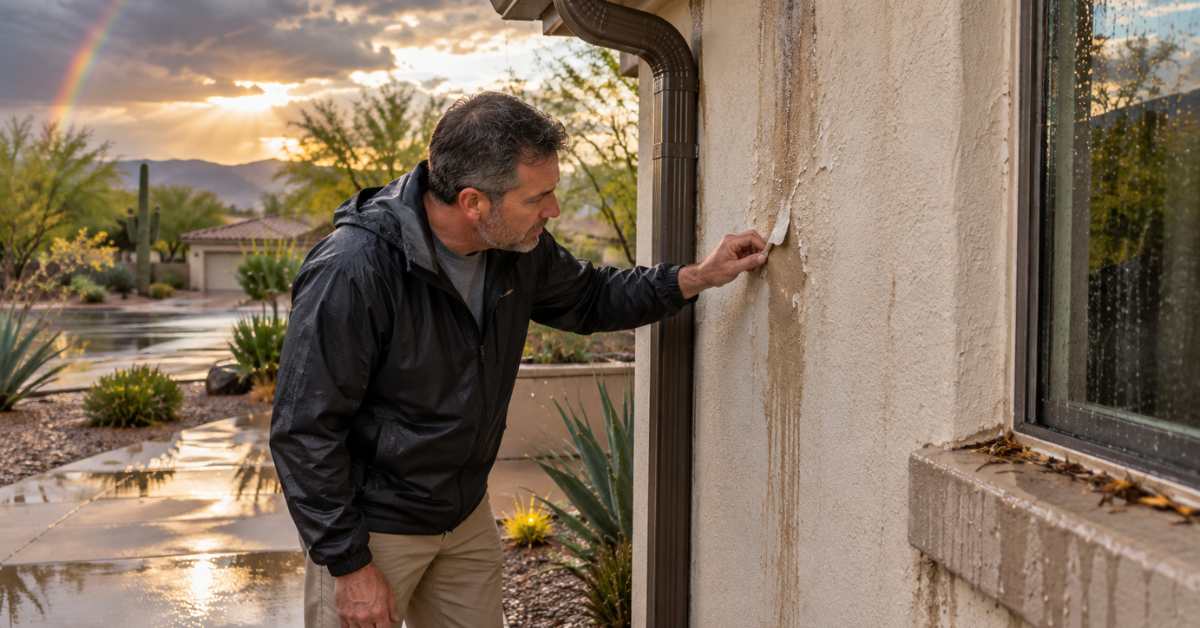
Here’s what I see on homes after monsoon season every year: peeling paint on fascia and trim, bubbling and blistering on stucco walls, cracking along rooflines, and staining from runoff. These aren’t cosmetic issues, they’re signs that your paint’s protective coating has been compromised, and moisture is getting where it shouldn’t be.
How Do I Inspect My Home’s Exterior for Monsoon Damage?
I recommend walking around your home within a week or two after monsoon season ends. Here’s exactly what I look for during my own inspections:
- Peeling or flaking paint: Check fascia, trim, and areas near downspouts. If paint is lifting in sheets or chips easily when you touch it, the bond has failed.
- Bubbling or blistering: Press gently on any bubbles. If they’re soft or crumble, moisture got behind the paint film. This is common on stucco walls that absorbed water.
- Cracking or alligatoring: Look for a web-like pattern of cracks in the paint. This happens when paint ages and loses elasticity, it can’t expand and contract with temperature swings anymore.
- Chalking: Rub your hand across painted surfaces. If chalky residue comes off on your palm, the paint’s binder is breaking down. Some chalking is normal, but heavy chalking means the coating is failing.
- Water stains or discoloration: Dark streaks or stained areas below rooflines, windows, or joints indicate water is getting behind the paint.
- Failed caulk: Check where different materials meet, around windows, doors, and where trim meets stucco. Cracked or separated caulk lets water behind the paint system.
Which Areas of My Home Are Most Vulnerable?
Not all walls age at the same rate. Here’s where I focus my inspection:
West-facing walls: These take the most abuse, intense afternoon sun plus monsoon exposure. They often look five years older than east-facing walls painted at the same time.
South-facing walls: Strong, direct light throughout the day accelerates fading and chalking. These walls need close inspection.
Fascia and roofline trim: Fascia sits near the roof edge and deals with sun, heat, wind, rain, and often poor drainage from gutters. It’s one of the first places I see paint failure.
Window and door trim: These areas get contact, moisture, and weather exposure. Caulk failures around windows and doors are common after monsoon season.
Previous repair areas: Spot repairs often fail before the surrounding paint because the preparation wasn’t as thorough or the new paint doesn’t match the aged surrounding coating.
Areas near irrigation: Sprinklers that spray directly on painted surfaces accelerate wear. Check walls near landscaping for moisture damage.
How Do I Document Damage for Insurance or Contractor Estimates?
If you find significant damage, documentation helps with insurance claims and contractor estimates. Here’s what I recommend:
- Take clear photos: Use good lighting and get close-ups of problem areas. Include wider shots that show the location on the house.
- Note the date: Document when you found the damage. This helps establish a timeline.
- Describe what you see: Write brief notes about each problem area, peeling, bubbling, cracking, staining, etc.
- Measure if relevant: For large areas of damage, note approximate dimensions (e.g., “peeling paint on west fascia, approximately 20 linear feet”).
This documentation helps painting contractors provide accurate estimates and helps insurance adjusters assess claims if the damage is covered.
Can I Fix Monsoon Damage Myself?
It depends on the extent of the damage. Here’s what’s DIY-friendly and what requires a professional:
DIY-friendly:
- Small areas of peeling paint on trim (scrape, sand, prime, touch-up)
- Replacing failed caulk around windows and doors
- Cleaning the exterior with a garden hose and soft brush
- Touching up minor scuffs and marks
Call a professional:
- Peeling paint on large areas or multiple walls
- Bubbling or blistering that indicates moisture intrusion
- Cracking in stucco that’s widening or extending
- Failed paint on fascia or roofline trim (requires ladder work and safety equipment)
- Water stains that indicate active moisture problems
- Exposed wood that needs repair before repainting
I’ll be honest, most monsoon-related damage requires professional attention. The issues are often interconnected, and proper repair requires experience with surface preparation, moisture management, and paint application.
Should I Repaint Immediately After Monsoon Damage?
Not necessarily. Here’s how I approach the timing:
Address moisture sources first: If damage is related to moisture intrusion, bubbling, staining, peeling near leaks, figure out where the water is coming from and fix it before repainting. Painting over active moisture problems leads to premature failure.
Wait for optimal weather: If monsoon season just ended, fall is the ideal time to repaint. Temperatures are moderate, paint cures properly, and you get the best results. Don’t rush into painting in late summer heat just because you noticed damage.
Temporary protection: If wood is exposed or damage is severe, you can apply a temporary protective coating or schedule a partial repair until full repainting is possible.
The key is to address the root cause, not just the symptom. Paint covers surfaces, but it doesn’t fix moisture problems, structural cracks, or failed caulk.
How Do I Prevent Monsoon Damage in the Future?
You can’t prevent monsoon storms, but you can minimize their impact. Here’s what I recommend:
- Use premium paint: High-quality paints with UV-resistant pigments and durable binders hold up better against weather exposure. Sherwin-Williams Duration, Emerald, and Benjamin Moore Aura are excellent choices for Arizona exteriors.
- Prepare surfaces properly: Paint won’t last if it’s applied to dirty, chalky, or damaged surfaces. Proper preparation, cleaning, scraping, sanding, priming, creates a strong bond that resists weather.
- Maintain caulk and seals: Inspect caulk around windows, doors, and trim annually. Replace failed caulk before monsoon season to prevent moisture intrusion.
- Manage irrigation: Adjust sprinklers so they don’t spray directly on painted surfaces. Constant moisture accelerates paint breakdown.
- Wash the exterior regularly: Dust and dirt accumulate on surfaces and accelerate paint breakdown. Washing every 12 to 18 months removes contaminants and extends paint life.
- Inspect annually: Walk around your home every spring and look for early signs of wear. Catching problems early makes them less expensive to fix.
What If My Paint Is Failing Extensively?
If you’re seeing widespread peeling, heavy chalking, significant fading, or multiple areas of damage, it’s time for a full repaint. Spot repairs won’t solve the problem, the entire coating system is failing.
Here’s what a full repaint involves:
- Complete surface preparation, pressure washing, scraping, sanding, repairing, caulking, and priming
- Application of premium paint with proper technique for each surface
- Attention to detail, clean lines, even coverage, proper drying times
- Quality control, inspecting the work as it progresses
A full repaint is a bigger investment than spot repairs, but it solves the problem comprehensively and gives you 7 to 10 years of protection (on stucco walls with premium paint).
How Do I Choose a Painter for Post-Monsoon Repairs?
Here’s what I recommend when selecting a painting contractor:
- Local experience: Arizona painters understand our climate, our surfaces, and our challenges. They know what works here.
- Emphasis on preparation: Ask about their prep process. If they don’t mention cleaning, scraping, priming, and caulking, that’s a red flag.
- Premium products: They should be using high-quality paints from reputable manufacturers, not budget products.
- Written estimates: You should know exactly what’s included, what the timeline is, and what the cost will be before work begins.
- References and reviews: Ask for references from recent projects. Look at their work in person if possible.
- Warranty: A professional painter stands behind their work with a written warranty.
Ready to Address Monsoon Damage on Your Arizona Home?
After 30 years of evaluating and repainting Arizona exteriors, I know how to address monsoon-related damage, and how to prevent it in the future. iPaint Homes specializes in exterior repainting and maintenance for Arizona homes.
We evaluate your home’s current condition, identify areas of damage, and recommend the best approach, whether that’s targeted repairs, a full repaint, or a maintenance plan to extend the life of your current paint job.
If monsoon season has exposed damage on your home’s exterior, don’t wait. Addressing problems early prevents more extensive (and expensive) damage later. Contact us for an estimate, I’ll come out, assess your home’s specific needs, and give you an honest recommendation on what needs attention now and what can wait.