
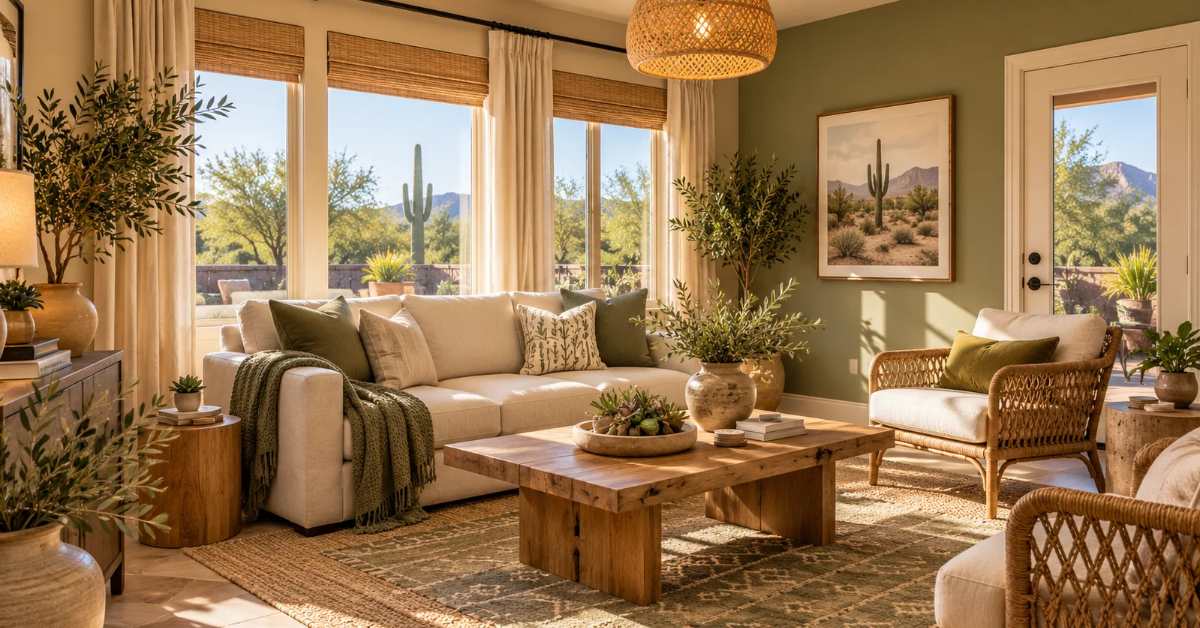
If you are repainting the inside of your Arizona home in 2026, expect to see fewer cold grays and a lot more warmth.
Warm whites are still popular, but homeowners are also bringing khaki, taupe, brown, clay, muted green, and deeper accent colors back into the conversation.
That shift makes a lot of sense in Arizona.
Many homes get strong natural light and already include stone, tile, wood, leather, and other finishes with warm undertones. Desert-inspired colors can help those materials feel connected instead of competing with them.
Still, a color being popular does not automatically make it right for your home.
The best choice depends on your lighting, flooring, cabinets, countertops, furnishings, and the way you want the room to feel.
Here are some of the strongest interior paint directions for Arizona homes in 2026.
1. Warm Whites Are Replacing Stark White
White is not going anywhere.
What is changing is the type of white homeowners are choosing.
Very bright, cool whites are giving way to warmer whites, soft creams, and off-whites with a little more softness.
That can work especially well in Arizona.
Intense sunlight may make a pure white room feel even brighter than expected. A warmer white can soften that effect while still keeping the room open and light.
Warm white works well in:
- Living rooms
- Kitchens
- Open floor plans
- Hallways
- Bedrooms
- Homes with beige, cream, or natural stone flooring
It also pairs naturally with wood cabinetry, leather furniture, stone, and desert-inspired decor.
2. Khaki Is Back, But It Looks Different Now
Do not picture the flat beige walls that were everywhere twenty years ago.
The newer khakis have more depth.
They sit somewhere between beige, tan, and muted earth tones, which gives them a more grounded and updated appearance.
For Arizona homes, that makes them especially useful.
Khaki works naturally with:
- Travertine
- Stone
- Wood
- Cream tile
- Warm flooring
- Leather
- Natural textiles
It can also help bridge older finishes with newer furniture, which makes it a practical option when you want to update a home without replacing everything around it.
3. Soft Taupe Is a Strong Whole-House Neutral
Taupe remains one of the easiest neutrals to live with.
It usually blends gray and brown, but the newer versions tend to lean warmer than the cool gray interiors that dominated the previous decade.
That extra warmth helps taupe work well in many Arizona homes.
It can connect both warm and cool finishes without making the space feel too beige or too gray.
Taupe is a good choice when you want more depth than off-white but still need a color that can flow through several rooms.
It works especially well in open layouts where one wall color needs to connect the kitchen, living room, dining area, and hallway.
4. Muted Green Brings in a Natural Feel
Green continues to be a strong interior direction in 2026.
But most homeowners are not reaching for bright, saturated greens.
Softer shades tend to be easier to live with, including:
- Sage
- Olive
- Smoky green
- Gray-green
- Blue-green
These colors feel calm, natural, and grounded.
They also pair well with wood, cream, tan, black, and stone.
In Arizona, muted green can provide a welcome contrast to the warm colors outside while still feeling connected to nature.
Try it in a bedroom, office, bathroom, kitchen, or accent area.
5. Smoky Blue-Green Adds More Personality
If sage feels a little too subtle, smoky blue-green can add more depth.
Jade-inspired and blue-green shades are a strong direction for 2026 because they bring color into the room without feeling as harsh as navy or black.
They can work especially well on:
- Built-in cabinets
- Kitchen islands
- Bathroom vanities
- Accent walls
- Home offices
- Powder rooms
Pair them with warm white walls and natural wood for a balanced look.
6. Desert Clay and Terracotta Feel Natural in Arizona
Living in the desert does not mean you have to avoid desert-inspired colors.
The key is choosing muted versions.
Soft terracotta, adobe, clay, and sunbaked red can add warmth without making the room feel themed.
These shades work especially well with:
- Cream
- Tan
- Wood
- Black metal
- Natural fabrics
- Warm stone
You also do not need four clay-colored walls to make an impact.
A dining area, office, built-in, or single accent wall may be enough.
7. Brown Is Making a Real Comeback
Brown is one of the bigger shifts happening in interior color.
For years, gray dominated.
Now deeper browns, espresso tones, and warm chocolate shades are returning.
These colors tend to work best when used intentionally.
An espresso or deep brown accent can look especially good on:
- Fireplace walls
- Built-ins
- Cabinets
- Dining rooms
- Home offices
- Interior doors
Brown also works naturally with many Arizona interiors because so many homes already include tan tile, wood, stone, and warm countertops.
8. Soft Beige Is Not the Same as Builder Beige
Beige has a bad reputation because of the yellow builder beige that appeared in so many older homes.
Today’s beige colors are more refined.
They often include a mix of gray, cream, brown, or muted taupe, which gives them a softer and more balanced appearance.
That makes them easier to decorate around.
If you are repainting an Arizona home with warm tile or stone that is staying in place, a modern beige may work far better than forcing a cool gray into the room.
9. Cream Can Soften Bright Arizona Light
Arizona sunlight can completely change the way a paint color looks.
A crisp white that looks beautiful on a paint chip may become extremely bright in a room with large south- or west-facing windows.
Cream can soften that effect.
It still keeps the room light and open, but adds enough warmth to prevent the space from feeling sterile.
Cream can also work especially well in traditional or Southwestern-style homes with warm existing finishes.
10. Deep Green Can Replace the Black Accent Wall
Black accent walls became popular because they add contrast and drama.
Deep green can create a similar sense of depth with a softer feel.
Dark olive, forest green, or deep blue-green can work beautifully behind:
- A bed
- A fireplace
- Built-in shelving
- A dining area
- A home office feature wall
These shades also pair well with brass, wood, leather, cream, and warm white.
Use darker colors in rooms with enough light to support them.
Arizona Light Changes Paint Colors
This is one of the most important things to understand before choosing interior paint.
Arizona homes often get strong sunlight.
That can make a color appear much lighter on the wall than it did in the store.
Window direction matters too.
A west-facing room may become warmer and brighter in the afternoon.
A north-facing room may make the exact same color look cooler.
That is why choosing a whole-house color from a tiny paint chip is risky.
Test Paint Before You Commit
Put samples on the actual walls.
Better yet, test more than one wall.
Then look at them:
- In the morning
- At midday
- In the afternoon
- At night
- With your interior lights turned on
A color that looks perfect at 10 a.m. can feel completely different at 6 p.m.
Testing first is a small step that can prevent a very expensive repaint.
Look at the Flooring Before Choosing the Wall Color
Wall color should work with the fixed finishes that are staying in the home.
That includes:
- Tile
- Wood flooring
- Carpet
- Countertops
- Cabinets
- Stone
- Backsplashes
Many Arizona homes already have warm tile or natural stone.
If those materials are staying, the wall color needs to work with them.
A trendy cool color can look completely wrong when everything around it has a warm undertone.
Do You Need One Color Throughout the Whole House?
Not necessarily.
Open floor plans often benefit from one main neutral that creates consistency.
Separate bedrooms, offices, bathrooms, and other enclosed spaces can carry more personality.
A simple palette might include:
- One main neutral
- One trim color
- Two or three supporting accent colors
That creates variety without making the house feel disconnected.
Do Not Choose a Color Only Because It Is Trending
Paint trends come and go.
Your walls will probably stay the same color for years.
Use trends as inspiration rather than rules.
If you dislike brown, there is no reason to paint your dining room brown simply because it is popular in 2026.
The best interior paint color is the one that works with your home, your lighting, and the way you want the room to feel.
Sheen Matters Too
Color gets most of the attention, but sheen also changes the finished appearance.
Flatter finishes can help disguise minor wall imperfections.
Higher-sheen finishes are often easier to clean but can make surface flaws more noticeable.
Kitchens, bathrooms, doors, trim, bedrooms, and living rooms may all call for different finishes.
The right choice depends on the surface, traffic, moisture, and condition of the existing walls.
Existing Homes Need More Than New Paint
Repainting an existing home is different from painting brand-new drywall.
Older walls may have:
- Nail holes
- Cracks
- Previous patches
- Scuffs
- Poor touch-ups
- Old color transitions
- Damaged areas
Those issues should be addressed before the finish coats go on.
Otherwise, fresh paint can make old imperfections stand out even more.
Good preparation is what helps the new color look clean, even, and consistent.
The Best Arizona Interior Colors for 2026
If you want a simple starting point, some of the strongest color directions for Arizona homes in 2026 include:
- Warm white
- Soft cream
- Modern khaki
- Warm taupe
- Muted sage
- Smoky blue-green
- Desert clay
- Soft terracotta
- Espresso brown
- Deep olive green
You do not need to use all of them.
Start with a neutral that works with your home’s permanent finishes, then bring in deeper color where you want more personality.
Give Your Arizona Home a Fresh Look for 2026
The biggest interior color direction for 2026 is not really one specific shade.
It is warmth.
Homeowners are moving toward colors that feel more natural, comfortable, and easier to live with.
That direction fits Arizona homes particularly well.
Warm whites, khakis, taupes, muted greens, clay tones, and rich browns can work naturally with desert light and the materials already found in many homes.
iPaint Homes specializes in repainting existing homes.
We evaluate the current wall condition, prepare worn and repaired areas properly, and create a clean, consistent new finish.
If your interior still feels stuck in an older gray, beige, or builder-white color scheme, 2026 may be a good time to give it a warmer, more personal look.