
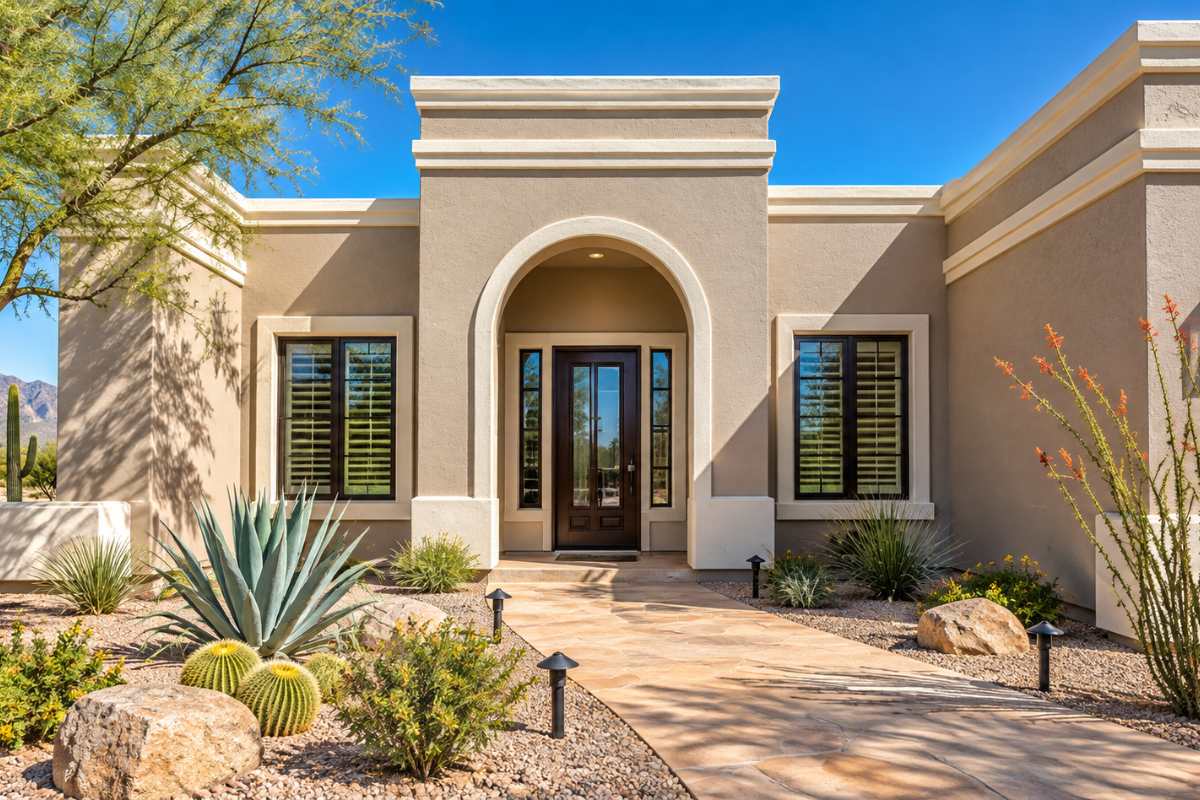
When homeowners plan an exterior repaint, color usually gets most of the attention.
But the finish matters just as much.
Flat, satin, and semi-gloss paints can all work well on an Arizona home, but they create different looks and are suited to different surfaces.
The best choice depends on several factors, including the material being painted, the condition of the surface, how much direct sun it receives, how often it needs to be cleaned, and the overall appearance you want.
In most cases, there is no single finish that makes sense for the entire exterior.
Stucco may call for one sheen, fascia and trim another, and doors or metal accents something different again.
That is why a good exterior repaint starts with more than simply choosing a color.
What Does Paint Finish Mean?
Paint finish, also called sheen, refers to how much light the dried surface reflects.
The more light it reflects, the shinier the paint appears.
Common exterior finishes include:
- Flat
- Low-sheen
- Satin
- Semi-gloss
- Gloss
For many Arizona homeowners, the main decision comes down to flat, satin, and semi-gloss.
Each has its own strengths.
The goal is to match the finish to the surface rather than use the same sheen everywhere.
Flat Paint Is a Popular Choice for Arizona Stucco
Flat exterior paint has very little shine, which makes it a common choice for stucco homes.
Arizona stucco often has visible texture, small repairs, patching, and natural variation across the surface.
A flat finish helps soften those differences.
Because it reflects less light, it can make large wall areas look more even and visually consistent.
That can be especially helpful on older homes that have been repaired or repainted several times.
Why Flat Paint Works Well on Textured Surfaces
Texture naturally creates highlights and shadows.
The more sheen a paint has, the more those ridges, patches, and irregular areas can stand out.
Flat paint reduces that effect.
By reflecting less light, it can create a softer appearance across heavily textured walls.
That is one reason flat or low-sheen finishes are often considered for:
- Stucco
- Masonry
- Textured siding
- Large exterior wall areas
If the goal is to make a textured exterior look more uniform, flat paint is often worth considering.
The Tradeoff With Flat Paint
Flat paint is excellent at minimizing surface imperfections, but it may not be as easy to clean as a higher-sheen finish.
That matters more on surfaces people touch regularly.
For large stucco walls, however, frequent scrubbing usually is not a major concern.
In those areas, the visual advantages of a flatter finish may outweigh the reduced washability.
Paint quality also matters.
Modern premium flat exterior products can perform much better than older flat paints, so the exact result depends on the coating system being used.
Satin Paint Offers a Middle Ground
Satin paint has a subtle sheen.
It reflects more light than flat paint but still avoids the highly reflective look of semi-gloss.
Many homeowners like satin because it balances appearance and cleanability.
It may work well on:
- Smooth siding
- Certain stucco surfaces
- Trim
- Fascia
- Doors
- Other areas that benefit from easier cleaning
Satin can also give the exterior a slightly richer, more finished look.
The tradeoff is that it tends to reveal more surface imperfections than flat paint.
Satin Can Work on Some Stucco Homes
Some Arizona homeowners prefer satin on stucco because it offers a little more washability and a slightly more noticeable finish.
That can work well when the wall surface is in good condition.
If the stucco has a lot of patching, repairs, or uneven texture, however, the extra sheen may make those areas more visible.
That does not automatically make satin a poor choice.
It simply means surface condition and preparation become more important.
In general, smoother walls handle higher-sheen finishes more gracefully.
Semi-Gloss Works Well on Smaller Exterior Details
Semi-gloss reflects noticeably more light than satin.
For that reason, it is less commonly used across large stucco wall areas.
Where it often works very well is on smaller architectural details.
Common examples include:
- Front doors
- Garage doors
- Trim
- Fascia
- Shutters
- Metal railings
- Decorative accents
Semi-gloss can create a crisp contrast against flatter wall finishes.
It is also often easier to wipe clean, which makes it useful on surfaces that get touched or collect dirt more regularly.
Doors Often Benefit From More Sheen
A front door has very different demands than a stucco wall.
It gets touched every day and is exposed to fingerprints, dirt, weather, and sun.
A satin or semi-gloss finish can make the door easier to maintain while giving it a more polished appearance.
A little extra sheen can also help an accent color stand out.
Colors like deep blue, charcoal, black, or other bold shades often look more intentional when paired with a finish that has some reflectivity.
Fascia and Trim Need a Practical Balance
Arizona fascia and trim can take a lot of sun.
Roof edges, in particular, may experience intense heat and prolonged exposure.
That means the coating needs to provide both a clean appearance and durable performance.
Satin or semi-gloss finishes are often considered for these areas because they can create a smooth, cleanable surface.
But sheen alone does not solve surface problems.
If fascia is cracked, peeling, or damaged, the material needs proper preparation and repair before repainting.
A shinier finish cannot hide failing wood or poor surface condition.
Higher Sheen Makes Imperfections More Noticeable
This is one of the most important things to understand when choosing an exterior paint finish.
The shinier the surface, the more likely it is to highlight:
- Patches
- Dents
- Waves
- Uneven texture
- Poor repairs
- Brush marks
- Roller marks
That is why semi-gloss can look excellent on a smooth front door but much less attractive across a large, uneven stucco wall.
The finish should work with the surface rather than draw attention to every flaw.
Arizona Sun Can Make Sheen Look Stronger
Paint sheen can appear very different outside than it does on a small sample.
Arizona’s strong sunlight can make reflective finishes look much shinier, especially on west-facing surfaces during the afternoon.
A satin that seems subtle in the shade may appear more noticeable in direct sun.
That is why exterior sampling can be helpful.
Looking at a test area on the actual home gives you a much better idea of how the finish will behave throughout the day.
Dark Colors Can Make Sheen More Noticeable
Darker colors often make sheen easier to see.
They can reflect sunlight in a way that emphasizes both texture and gloss level.
That does not mean dark colors should be avoided.
It simply means the finish deserves more thought.
A dark semi-gloss surface can look dramatically different from the same color in a flat or low-sheen finish.
If you want a deep color without a shiny appearance, a flatter sheen may be the better fit.
Color and Sheen Should Work Together
Exterior color and paint finish are separate decisions, but they influence each other.
Many Arizona homeowners prefer lighter exterior colors because they work well with desert architecture and may absorb less solar heat than very dark colors.
Sheen does not replace good color selection.
The two should be considered together.
The goal is to choose a color and finish combination that makes sense for the style of the home, the surface being painted, and the amount of sun exposure.
Preparation Matters More Than Sheen
No finish can compensate for poor surface preparation.
If the exterior has peeling paint, chalking, failed caulk, exposed wood, or loose material, those issues need to be addressed before new paint is applied.
Preparation may include:
- Washing
- Scraping
- Sanding
- Caulking
- Patching
- Priming
- Repairing damaged areas
The final sheen affects appearance, but proper preparation is what gives the new coating a sound surface to bond to.
Chalking Is Common on Arizona Exteriors
Older exterior coatings can develop a powdery residue over time.
This is known as chalking.
Arizona sun and weather can contribute to that breakdown.
If fresh paint is applied directly over heavy chalking, adhesion may be affected.
That is why cleaning and surface evaluation are so important before repainting.
A professional painter should determine whether the surface needs washing, priming, or additional preparation before the new finish goes on.
Do Not Choose a Finish Based on Looks Alone
Appearance matters, but it should not be the only consideration.
Ask practical questions too.
How often will the surface be touched?
Will it need regular cleaning?
How textured is it?
How much direct sunlight does it receive?
Are there visible repairs?
Is the surface stucco, wood, metal, or another material?
The answers help narrow down which sheen is most appropriate.
A Common Exterior Finish Combination
Many Arizona homes use more than one finish across the exterior.
A common approach might look like this:
Flat or low-sheen: large stucco wall areas
Satin: fascia, trim, or smoother siding
Semi-gloss: doors, shutters, and other accent surfaces
This is not a strict rule.
Every home has different surfaces, exposure, and existing conditions.
But using several finishes can create a practical balance between appearance, durability, and cleanability.
Existing Homes Need a Closer Evaluation
Repainting an existing home is different from painting new construction.
Older walls and trim already have a history.
They may have several coats of paint, repaired stucco, weathered wood, or areas with different sheens from previous work.
That means the existing condition should guide the repaint.
iPaint Homes evaluates current surfaces before recommending finishes so the new coating works with what is already there.
The goal is not simply to apply a fresh color.
It is to create a finish that makes sense for the home as it exists today.
What Is the Best Exterior Paint Finish for Arizona Homes?
There is no single answer that works for every property.
For many stucco homes, flat or low-sheen paint is a strong choice for the main wall areas because it helps minimize texture and surface variation.
Satin can be a good option when you want a little more washability and a slightly richer appearance.
Semi-gloss is often better suited to doors, trim, and smaller accent areas where added sheen and cleanability can be useful.
The best exterior paint finish for Arizona homes depends on the surface, condition, color, sun exposure, and level of maintenance expected.
iPaint Homes specializes in repainting existing Arizona homes.
We evaluate the current coating, prepare worn surfaces, and help homeowners choose colors and finishes that make sense for the house.
A successful exterior repaint is about more than finding the right color.
Choosing the right sheen for each surface can help the home look cleaner, more balanced, and easier to maintain for years to come.