
Key Takeaways
- Monsoon storms don’t cause paint failure, they reveal weaknesses already developing from months of sun and heat exposure
- Peeling paint, open cracks, failed caulk, and bubbling are warning signs that need attention before they worsen
- West- and south-facing walls age fastest in Arizona, inspect those first after every major storm
- Heavy chalking means the paint film is breaking down and needs proper preparation, not just a new coat
- Fascia and trim often fail before stucco walls, check rooflines, window frames, and wood features closely
- Don’t paint over wet surfaces or active moisture problems, fix the source first, then repaint
In my 30 years of matching paint colors and evaluating exterior finishes across Arizona homes, I’ve learned that monsoon season is when your house tells you the truth about its paint.
During dry months, problems hide. Then a big storm rolls through, wind-driven rain, blowing dust, sudden temperature shifts, and suddenly you notice peeling near the fascia, bubbling around a window frame, or cracks in the stucco you didn’t see before.
Here’s what I want homeowners to understand: the storm didn’t cause those problems. It exposed weaknesses that had been developing for months under the Arizona sun and heat. Exterior paint protects stucco, fascia, trim, doors, and every painted surface on your home. But as coatings age, they lose their ability to stand up to weather.
That’s why the weeks after summer storms are the best time to walk around your house and look closely at what’s changed.
What Does Monsoon Rain Actually Do to Exterior Paint?
Rain doesn’t usually cause paint failure by itself. What it does is reveal a weakness that was already there.
Here’s the sequence I see over and over: Arizona sun and heat gradually dry out and weaken older coatings throughout the spring and early summer. Caulk cracks. Small stucco cracks open up. Paint begins losing its bond to the surface. Then a monsoon storm arrives.
Wind-driven rain reaches those vulnerable areas and makes the damage visible. You may suddenly notice peeling, bubbling, staining, or other changes that weren’t obvious during dry weather.
I’ve inspected hundreds of homes after monsoon season, and the pattern is always the same, the storm is the messenger, not the problem.
How Do I Know If My Paint Is Peeling or Flaking?
Peeling paint is one of the clearest signs that an exterior surface needs attention. In my experience, these are the areas where it shows up first:
- Fascia boards near the roofline
- Trim around windows and doors
- Front doors and garage doors
- Window frames
- Decorative wood features
- Areas that were previously repaired
Here’s what I tell every homeowner: once paint begins lifting away from the surface, simply adding another coat over it will not solve the problem. Loose material needs to be removed first. The surface then needs proper preparation, scraping, sanding, priming, before repainting. Skipping that step is the number one reason I see paint fail again within months.
What Causes Bubbling or Blistering After a Storm?
Bubbles under exterior paint can develop for several reasons. Heat contributes. Moisture contributes. If blistering appears after heavy rain, water may have reached behind the coating or into the surface underneath.
Don’t simply pop the bubble and paint over it. I’ve made that mistake early in my career, and the new coating always fails for the same reason. First, determine why it happened. If a leak, failed seal, or moisture issue is involved, that problem should be corrected before repainting.
Should I Worry About Stucco Cracks After Monsoon Season?
Small stucco cracks are common on Arizona homes, almost every home I inspect has some. Monsoon season can make them easier to notice because rain and changing light highlight differences in the surface.
Walk around the exterior and look closely at the walls, especially around windows, doors, corners, roof lines, and previous repairs.
Some minor cracks can be addressed as part of normal repaint preparation. Larger cracks, widening cracks, or areas that appear to be changing may need further evaluation before painting begins. Paint can improve appearance and provide surface protection, but it is not a structural repair.
Why Does Exterior Caulk Fail in Arizona?
Caulk plays an important role in sealing joints and gaps around your home. Arizona heat dries it out over time, I’ve seen caulk that was completely brittle and cracked after just a few summers.
You may begin to see cracking, shrinking, splitting, or complete separation around windows, doors, trim, and other exterior transitions.
When caulk fails, wind-driven rain finds a path behind painted surfaces. That’s when you get water stains, bubbling, and peeling that seem to come out of nowhere. Replacing failed caulk before repainting helps close those vulnerable gaps and creates a better surface for the finished paint job.
Why Does Fascia Need Extra Attention?
Fascia takes more weather exposure than almost any other part of your Arizona home. It sits near the roof edge and deals with sun, heat, wind, rain, and often poor drainage from gutters.
When I inspect a home after monsoon season, fascia is where I look first. Here’s what I check for:
- Peeling paint
- Exposed wood
- Cracks in the coating
- Dark staining from moisture
- Soft or damaged areas
If fascia is already exposed, waiting too long allows additional weathering. Damaged wood may need repair before repainting. I’ve seen fascia boards that could have been saved with timely repainting turn into full replacements because the owner waited too long.
Can Wind-Driven Rain Reach Inside My Walls?
Arizona storms don’t always bring gentle rain. Strong wind can push water against walls, windows, doors, roof edges, and other exterior surfaces. Areas that normally stay dry may suddenly get wet.
That makes monsoon season a useful test of your home’s exterior. After a strong storm, look for new stains or areas that seem to stay damp longer than expected. If you suspect water intrusion, also check the interior around windows, exterior walls, and other nearby areas.
Is the Dust Just Dirt, or Is It a Sign of Paint Failure?
Monsoon season also brings dust, sometimes a lot of it. Dust settles on stucco, trim, doors, and other painted surfaces. Then rain can turn that dirt into streaks or muddy residue.
A dirty exterior does not automatically mean the paint has failed. Sometimes the surface simply needs cleaning. However, washing the home may reveal fading, chalking, cracks, or older repairs that were hidden underneath the dirt.
What Is Paint Chalking and Should I Be Concerned?
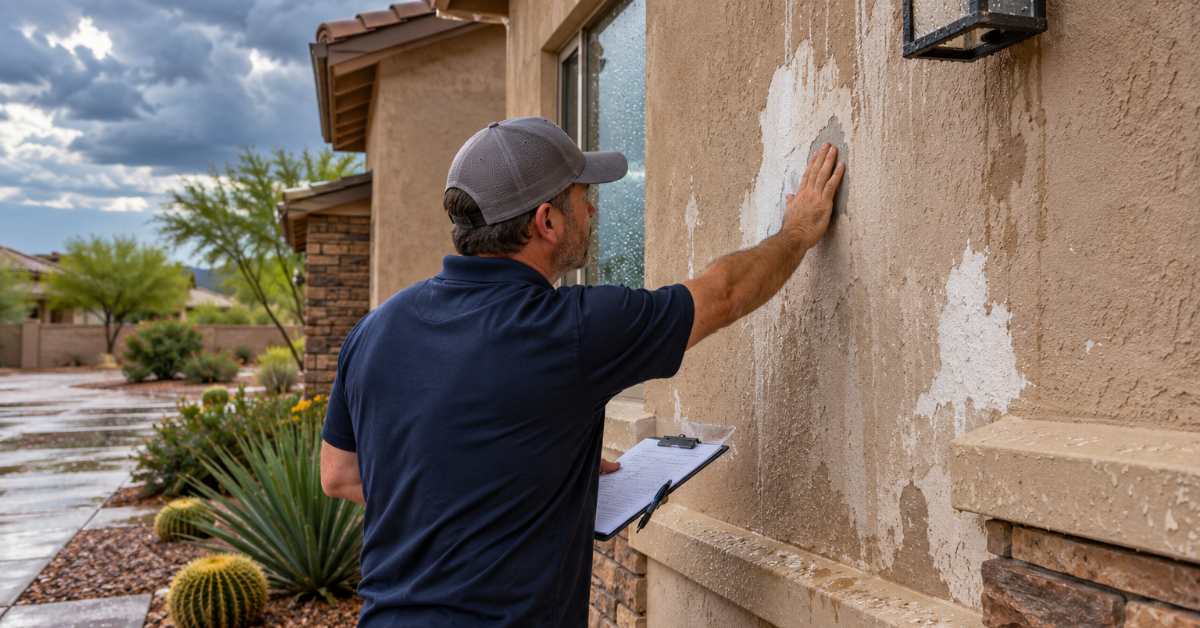
Older exterior paint may develop a powdery surface known as chalking. If you rub the wall and a dusty paint residue comes off on your hand, the coating may be breaking down.
That matters before repainting. New paint needs a clean, stable surface. Heavy chalking should be addressed during preparation instead of being painted over. Otherwise, the new coating is trying to bond to loose residue rather than the actual surface, and it will fail.
Which Walls Should I Inspect First?
Arizona homes don’t weather evenly. Walls that receive strong afternoon or daytime sun often age faster. Then monsoon storms add another layer of exposure.
Compare heavily exposed walls with shaded areas. You may notice more fading, chalking, or cracking on the west or south side of the home. That difference helps me understand how much the existing coating has aged and whether a full repaint or targeted maintenance makes sense.
What Happens When Wood Is Left Exposed?
Paint helps protect exterior wood from direct weather exposure. Once the coating peels away, the wood underneath becomes vulnerable. Look closely at fascia, trim, decorative wood, doors, and other painted wood surfaces.
If you see bare areas, address them before additional weather exposure causes more deterioration. Preparation may involve scraping, sanding, priming, or repairing damaged sections before the finish coats are applied.
What Do Water Stains on My Exterior Mean?
A stain doesn’t automatically mean you need a painter. It may point to a leak, drainage issue, or another source of moisture. Before repainting, figure out where the water is coming from.
Possible sources include roof problems, gutters, flashing, irrigation, windows, or other exterior openings. Painting over active moisture may hide the stain temporarily, but it doesn’t solve the cause. Correct the source first, then repair and repaint the affected surface.
Should I Paint During Monsoon Season?
Summer weather can make exterior painting more complicated. Painters need to consider temperature, surface conditions, rain, and drying time.
Paint should not be applied to a wet surface or when weather conditions fall outside the coating manufacturer’s requirements. That doesn’t mean exterior painting automatically stops during summer, it means the crew needs to watch the weather closely and plan the work properly.
Rushing paint onto damp or poorly prepared surfaces can create problems later. In my three decades, I’ve seen more paint failures from bad preparation than from bad paint.
When Is It Time to Repaint After Monsoon Season?
A little dirt after a storm doesn’t mean the house needs repainting. Look for a combination of warning signs. You may want to start planning a repaint when you see:
- Significant fading across multiple walls
- Heavy chalking that comes off on your hand
- Peeling paint in several areas
- Cracking in the coating
- Failed caulk around windows and doors
- Exposed wood on fascia or trim
- Worn fascia or trim boards
- Patchy previous repairs that stand out
At that point, repainting becomes more than a color update. It helps renew the exterior finish before weathering becomes more extensive.
How Can I Protect My Arizona Home After Monsoon Season?
Arizona monsoon storms expose weak points in an aging exterior. The good news is that many of those problems can be spotted simply by walking around the home and paying attention.
Look for peeling, bubbling, cracks, failed caulk, exposed surfaces, stains, and damaged trim. Then address moisture or repair issues before applying new paint.
iPaint Homes specializes in interior and exterior repainting for existing homes. We evaluate the current finish, identify areas that need preparation, and create a clean, consistent new exterior.
If summer sun and monsoon weather have left your home looking faded, worn, or weathered, it may be time to schedule an exterior painting estimate. After 30 years of doing this, I can tell you, the sooner you address these issues, the less extensive (and less expensive) the repair will be.